
mosaic rooms
Earl’s Court, London
Type | Art Gallery, Learning Spaces and Outdoor Garden
Client | A. M. Qattan Foundation (British Charity Reg. 2171893)
Contractor | Rose Development Services
Status | Completed February 2026
Photographer | Andy Stagg
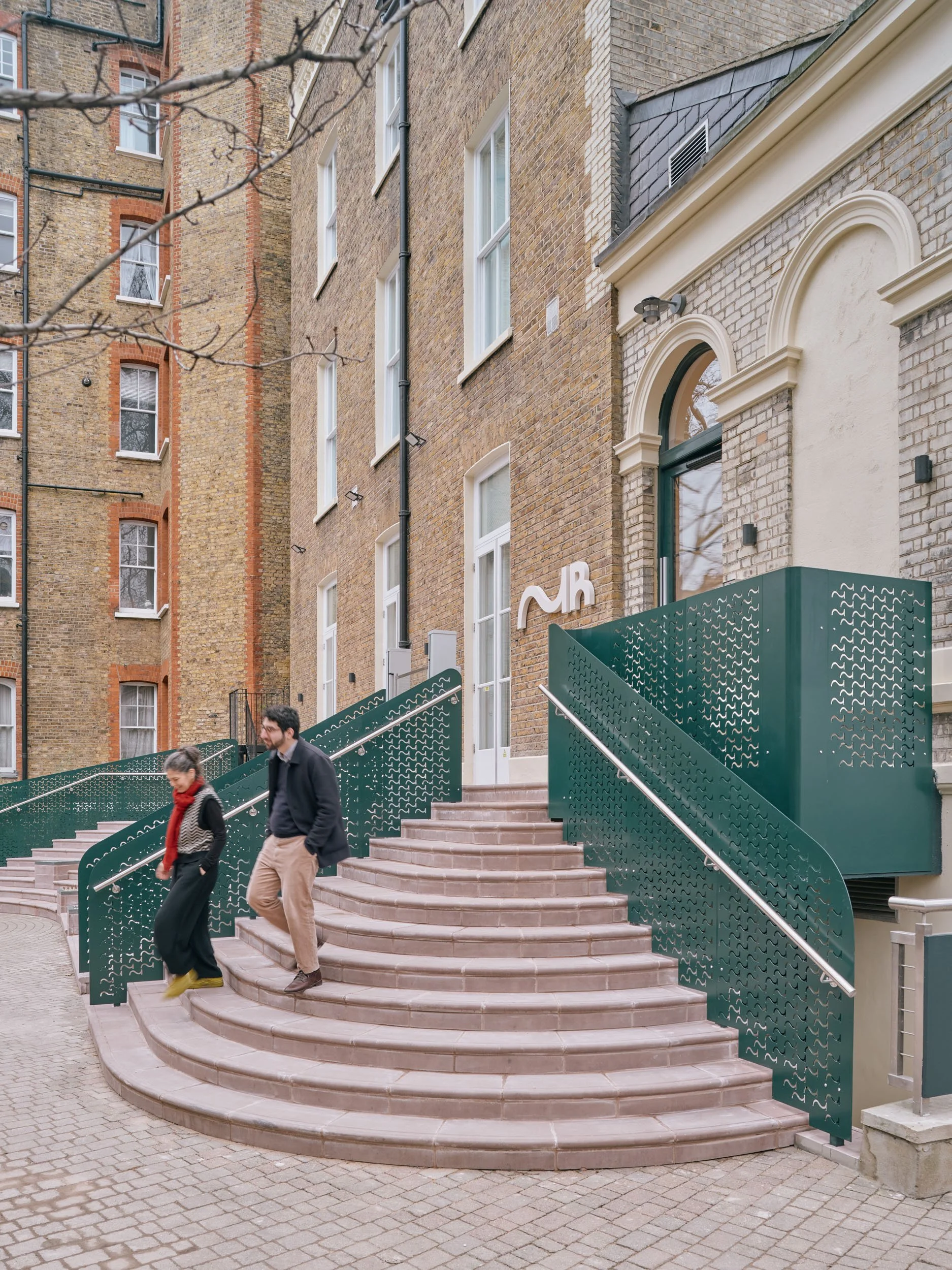
Arrival is not where you end up but how you are welcomed. In the redesign of Mosaic Rooms, this idea became the foundation of the project. The building’s former configuration - a grand entrance on Cromwell Road, a rear car park, and a discreet side‑door for wheelchair users - created a separation between visitors before they even stepped inside. Our work set out to reverse this and realign the design with Mosaic Rooms’ ethos and vision.
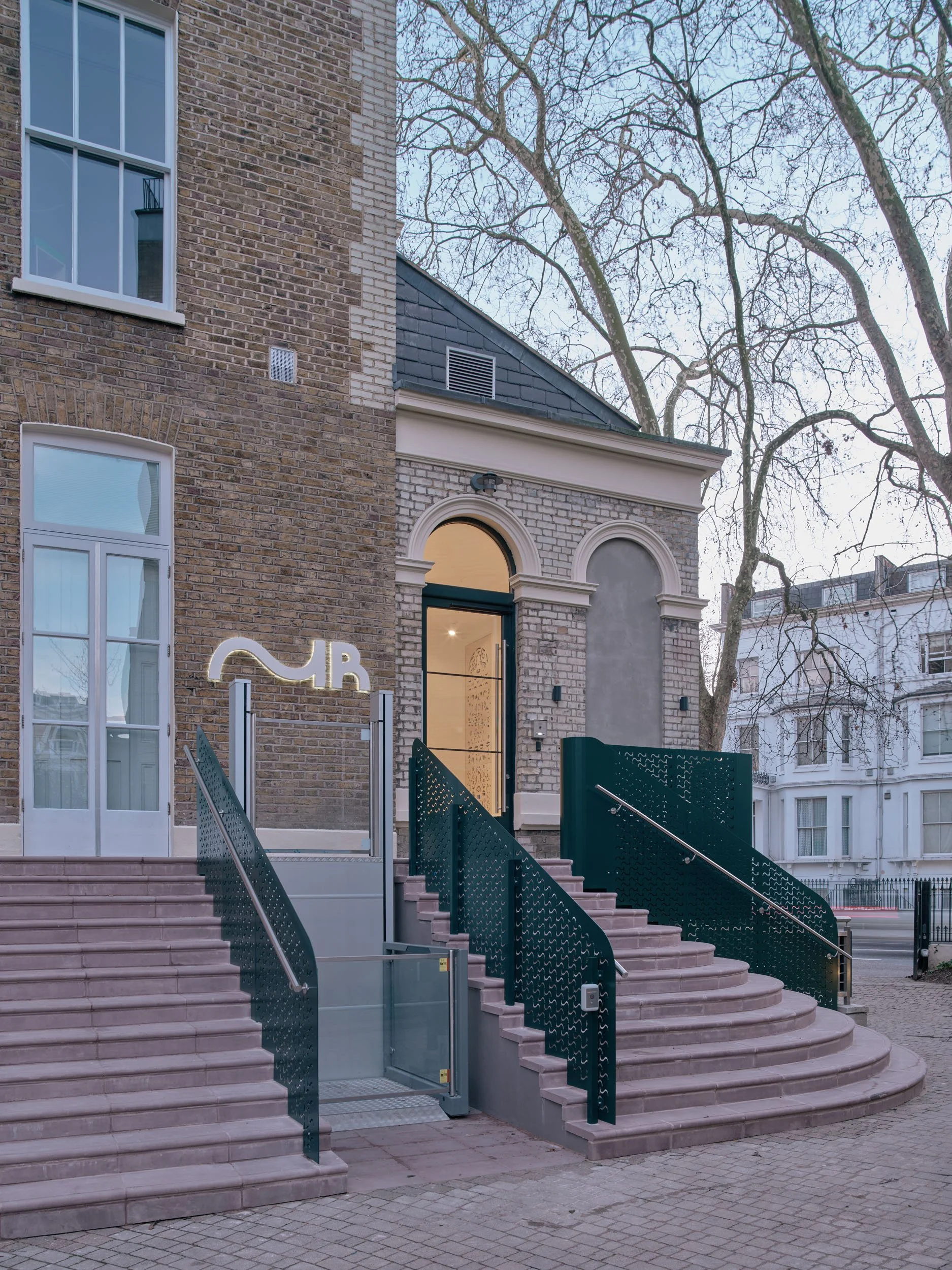
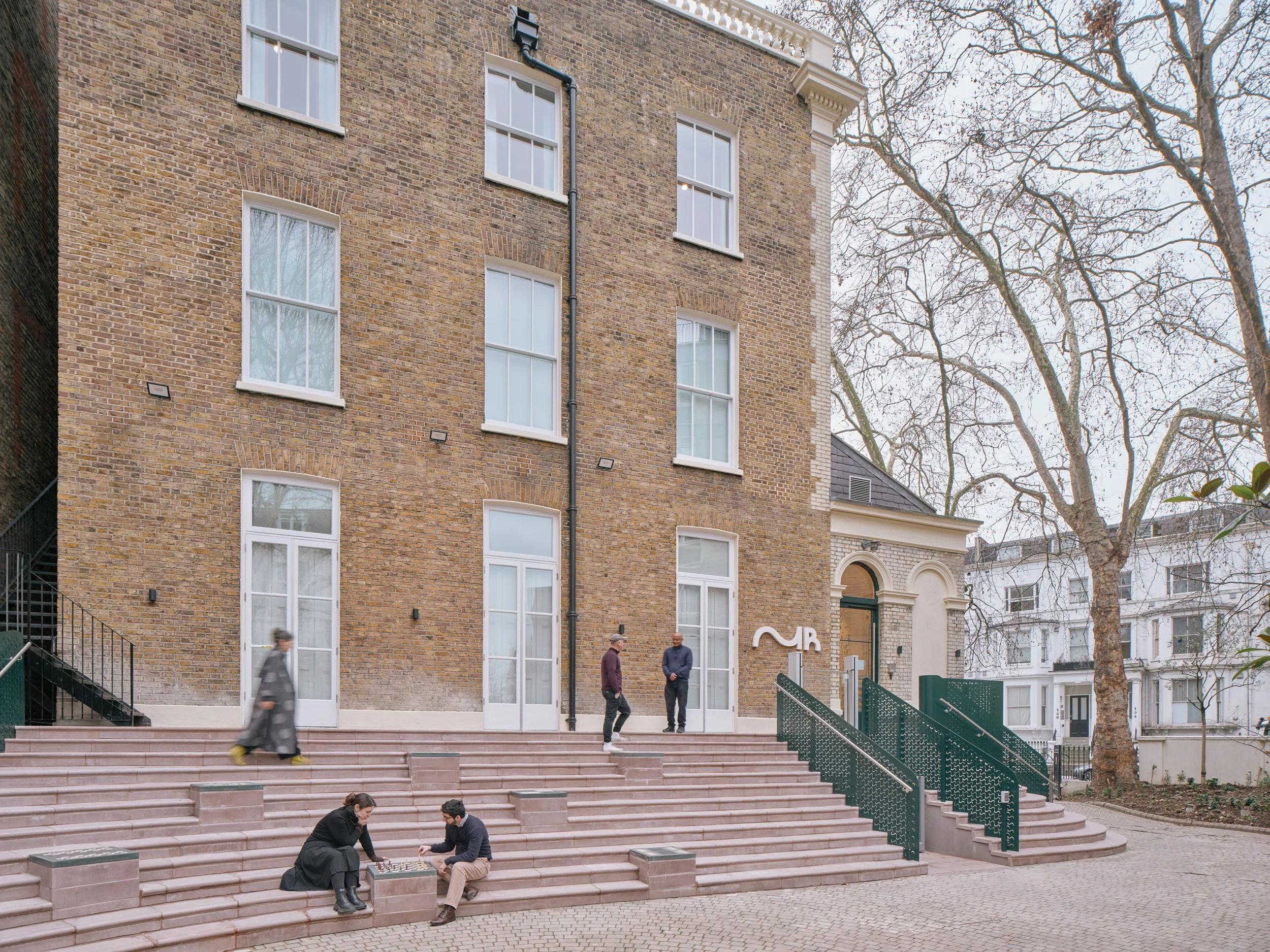
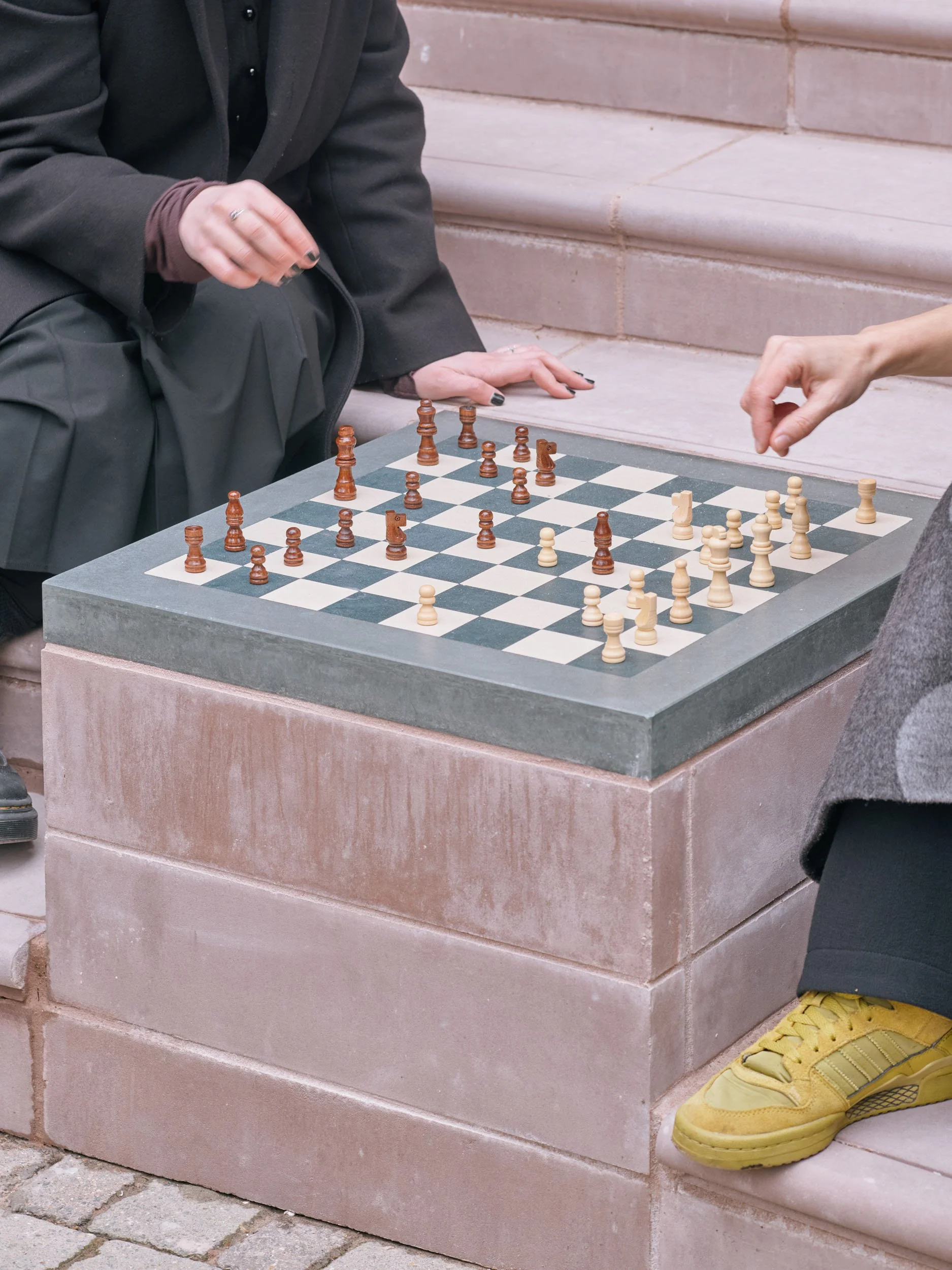
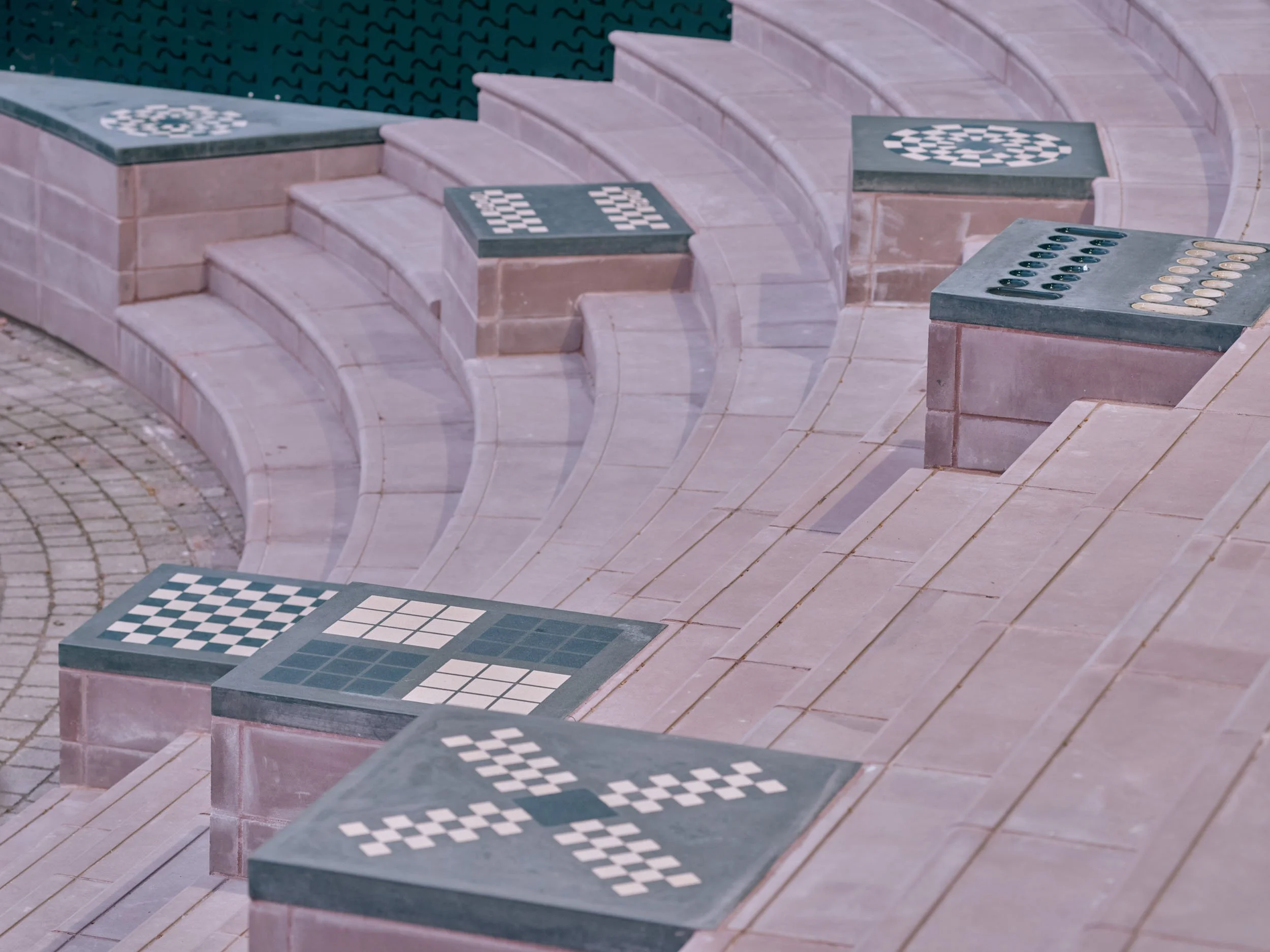
A new public access from Earl’s Court Road now brings all visitors through a shared courtyard with a small amphitheatre: a quiet, oasis‑like threshold designed for calmness, play, and gathering. It transforms what was once back‑of‑house into an inclusive entrance sequence where everyone arrives together. Within the ‘dark plum’ stone amphitheatre, we integrated bespoke Jesmonite board-game inlays (made by Windsor Workshop). Each game is drawn from the client’s list of Arab‑influenced ancient games, grounding the space in cultural narration and offering moments for sitting, playing, and taking time out. Embedding play, cultural reference, and quiet gathering into the courtyard reflects a wider commitment to placing accessibility and creative learning at the heart of the visitor experience.
Holding this commitment required determination. Despite pressure from the local authority not to install a wheelchair lift in such a prominent and visible location, we remained committed to a solution that placed accessibility at the centre of the design. The result is an entrance that is equitable, legible, and welcoming for all.
This commission reaffirmed our belief that refurbishment -rather than demolition- can provide sustainable, imaginative, and generous ways to adapt London’s historic buildings to new needs.
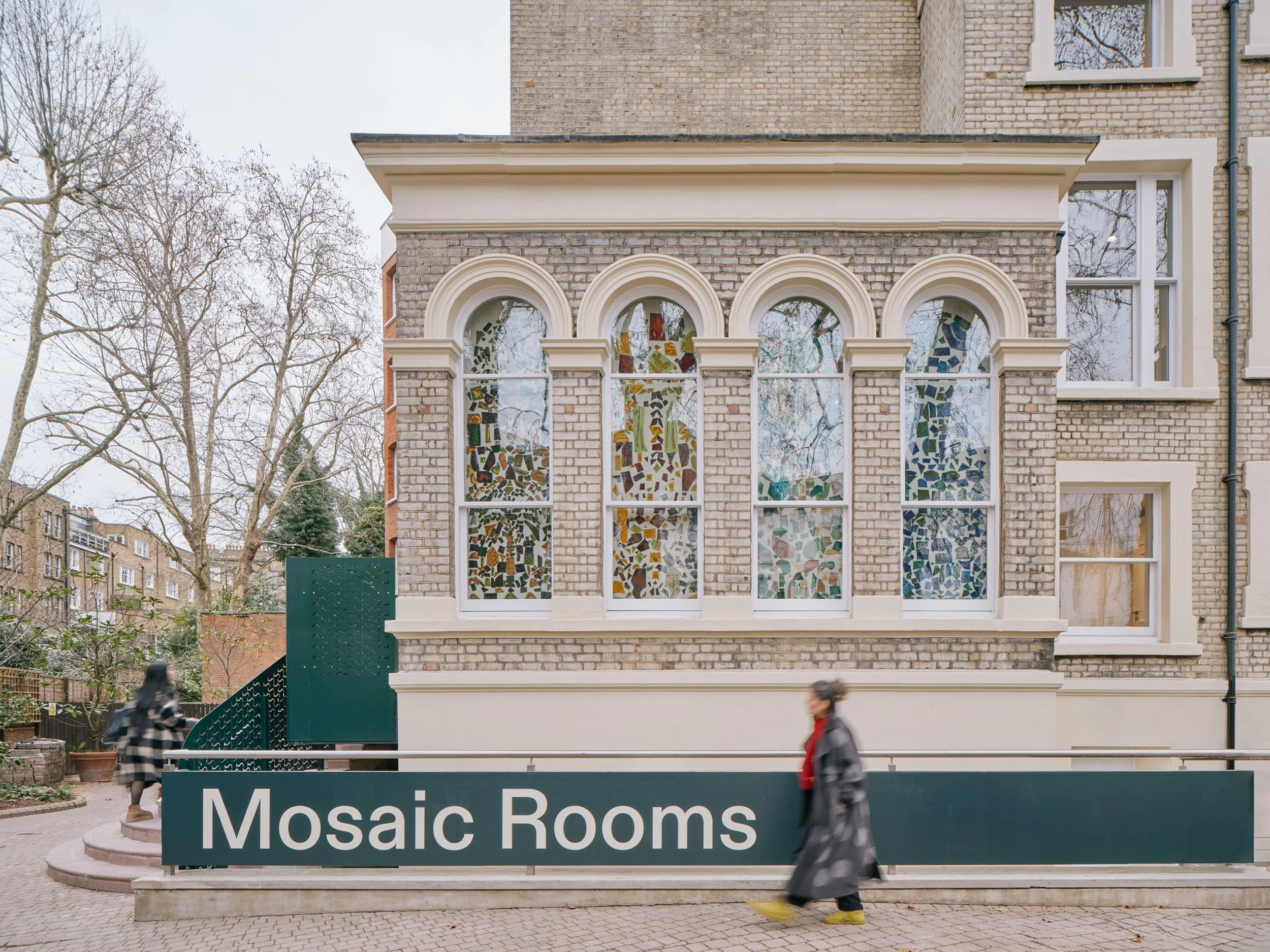
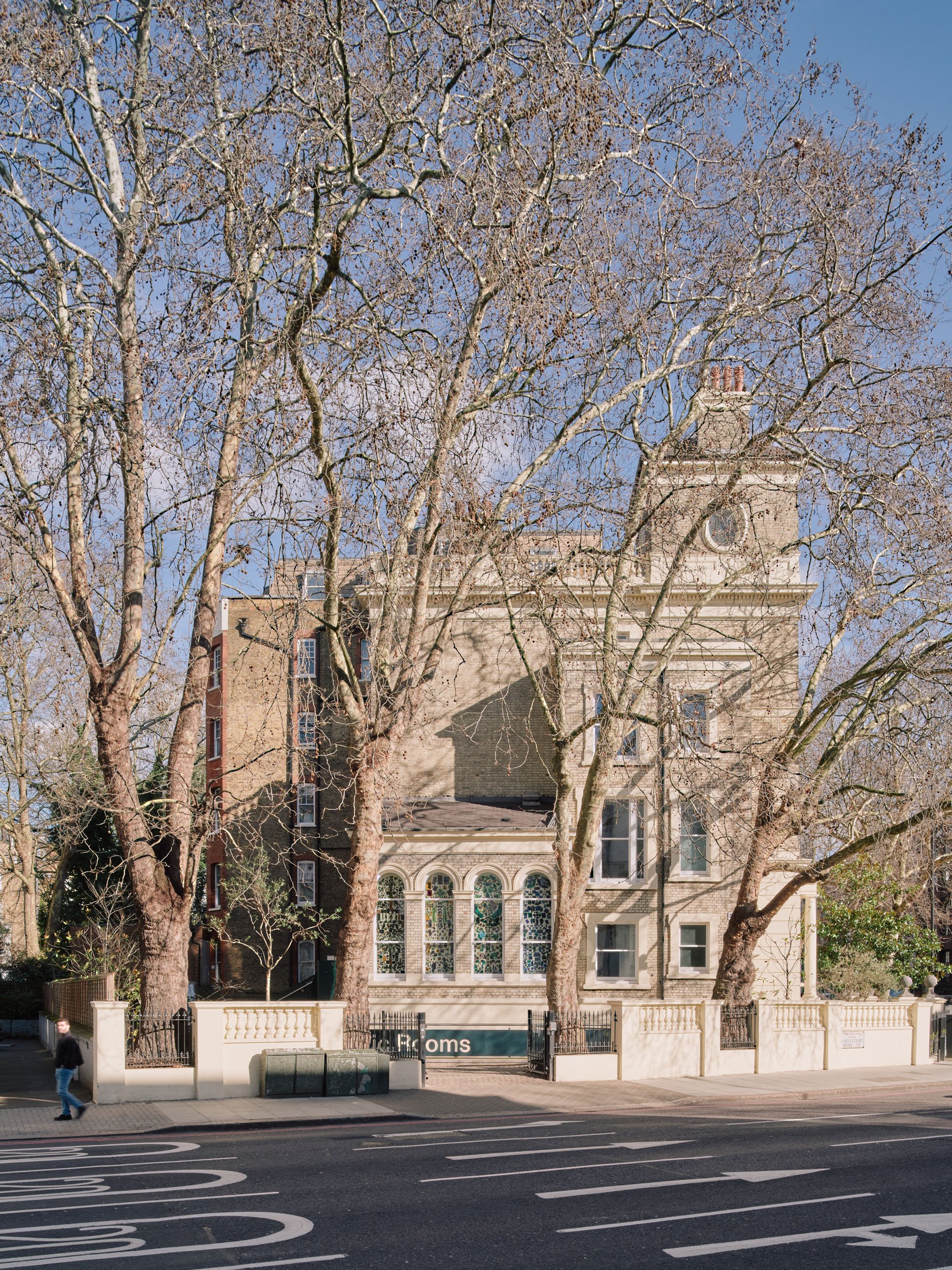
This project marks the completion of a significant two‑year commission for Mosaic Rooms, a charitable organisation dedicated to promoting contemporary arts and culture from the Arab world. Mosaic Rooms occupies The Tower House, a prominent Victorian building at the corner of Cromwell Road and Earl’s Court Road, within the South Kensington Conservation Area. Designed by the architect of Earl’s Court as a commanding presence overlooking nineteenth‑century construction sites, the building is historic and architecturally impressive, yet its imposing character sat at odds with the warmth and openness central to Mosaic Rooms’ public programme.
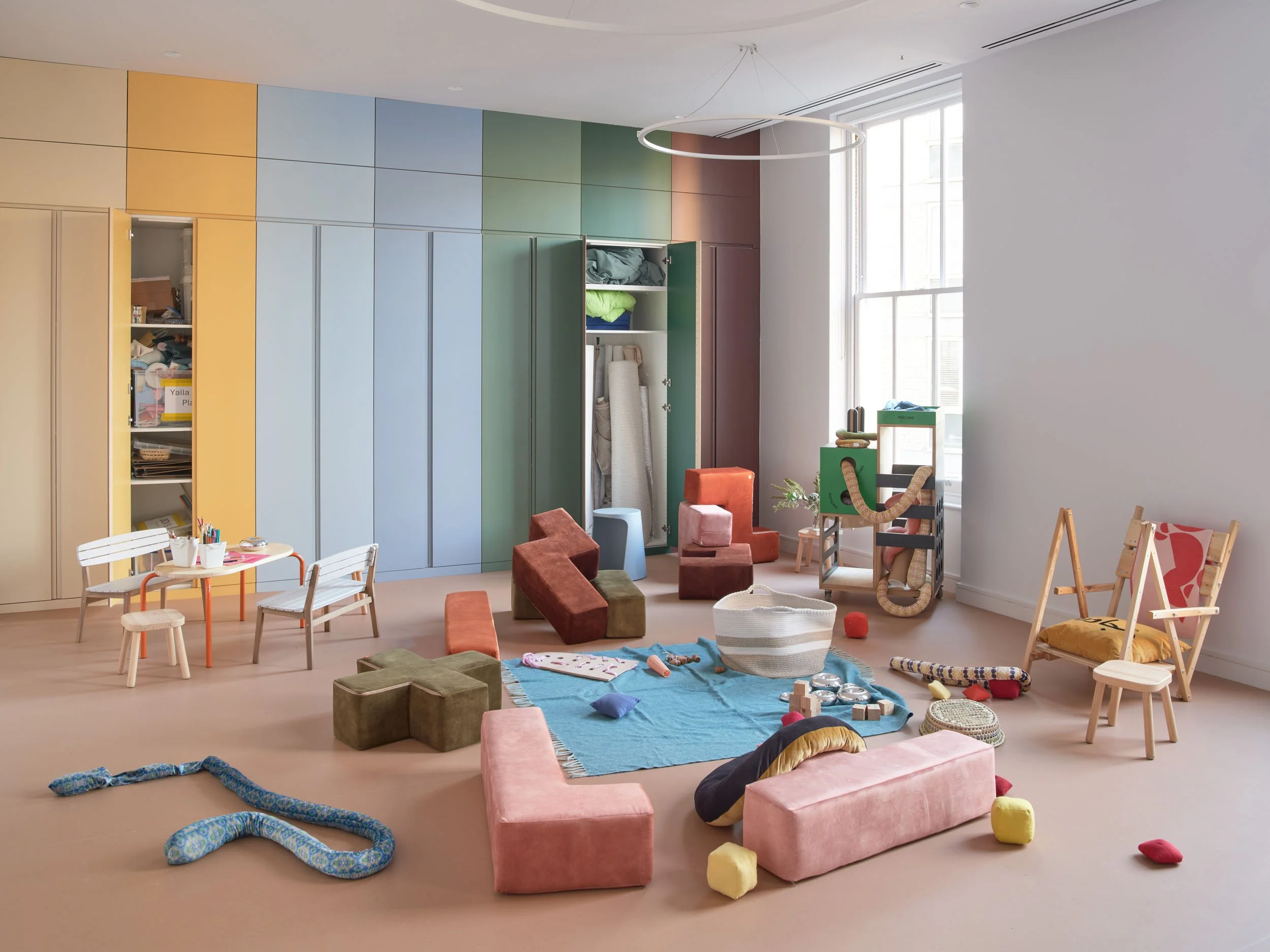
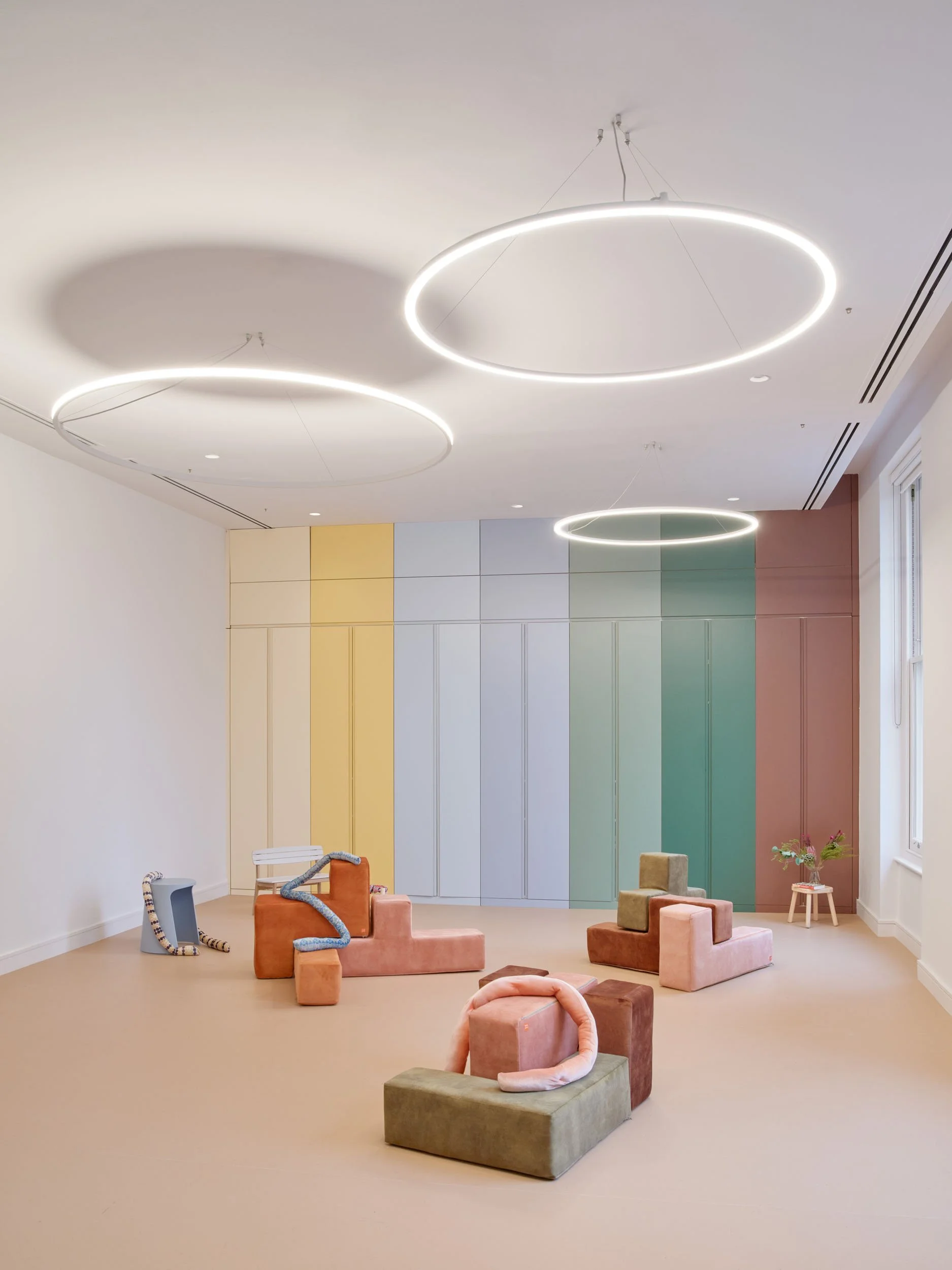
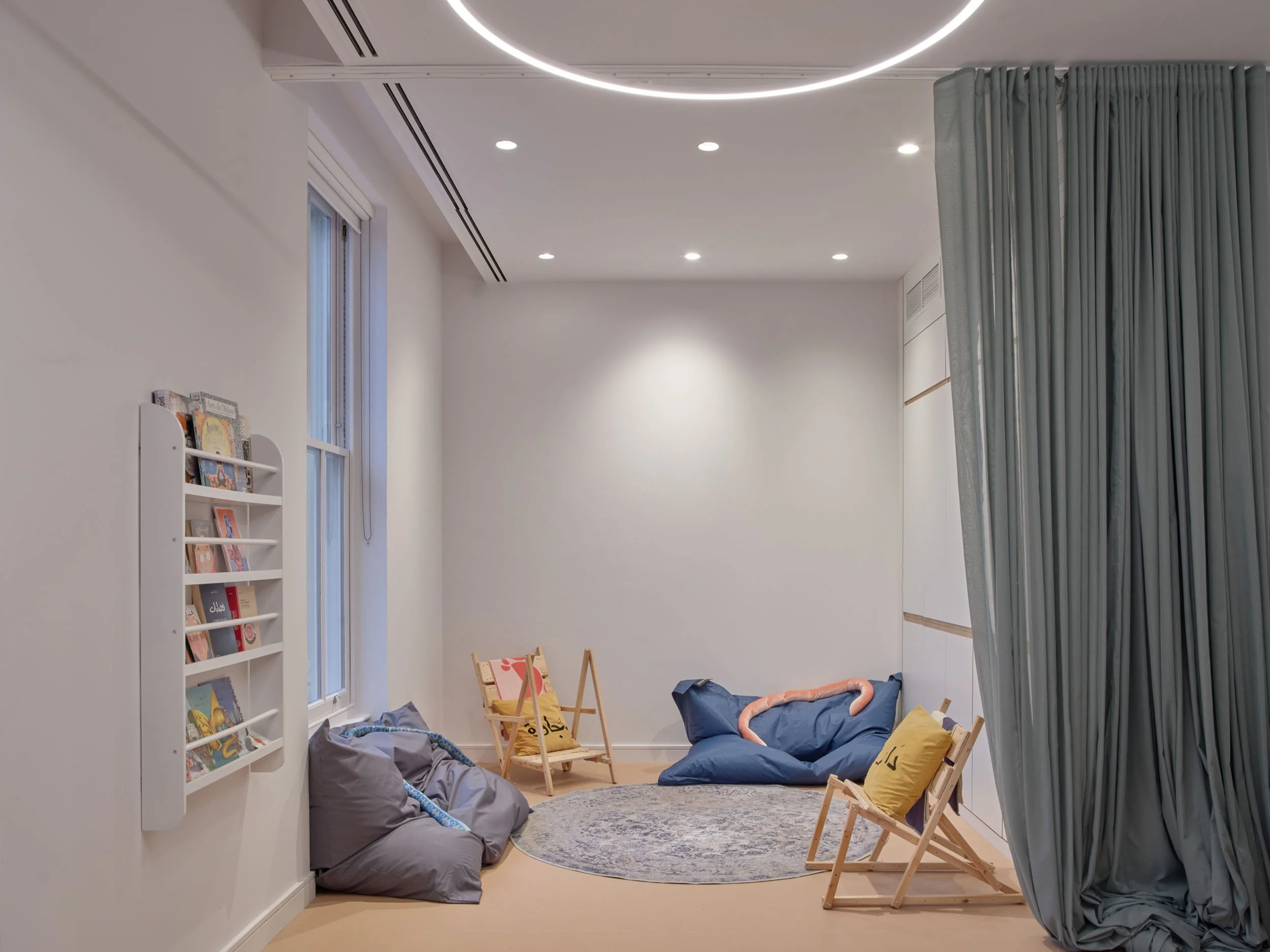
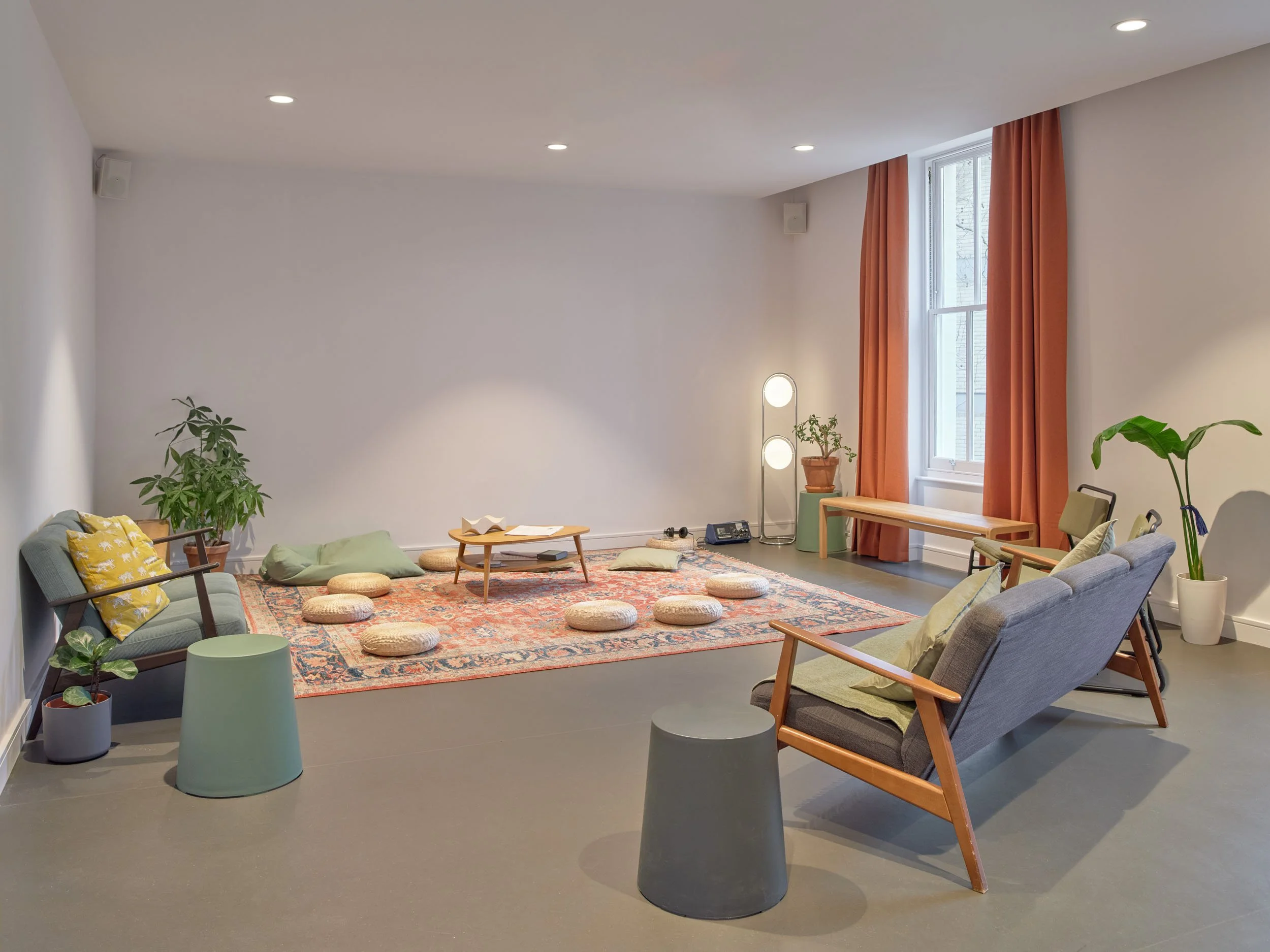
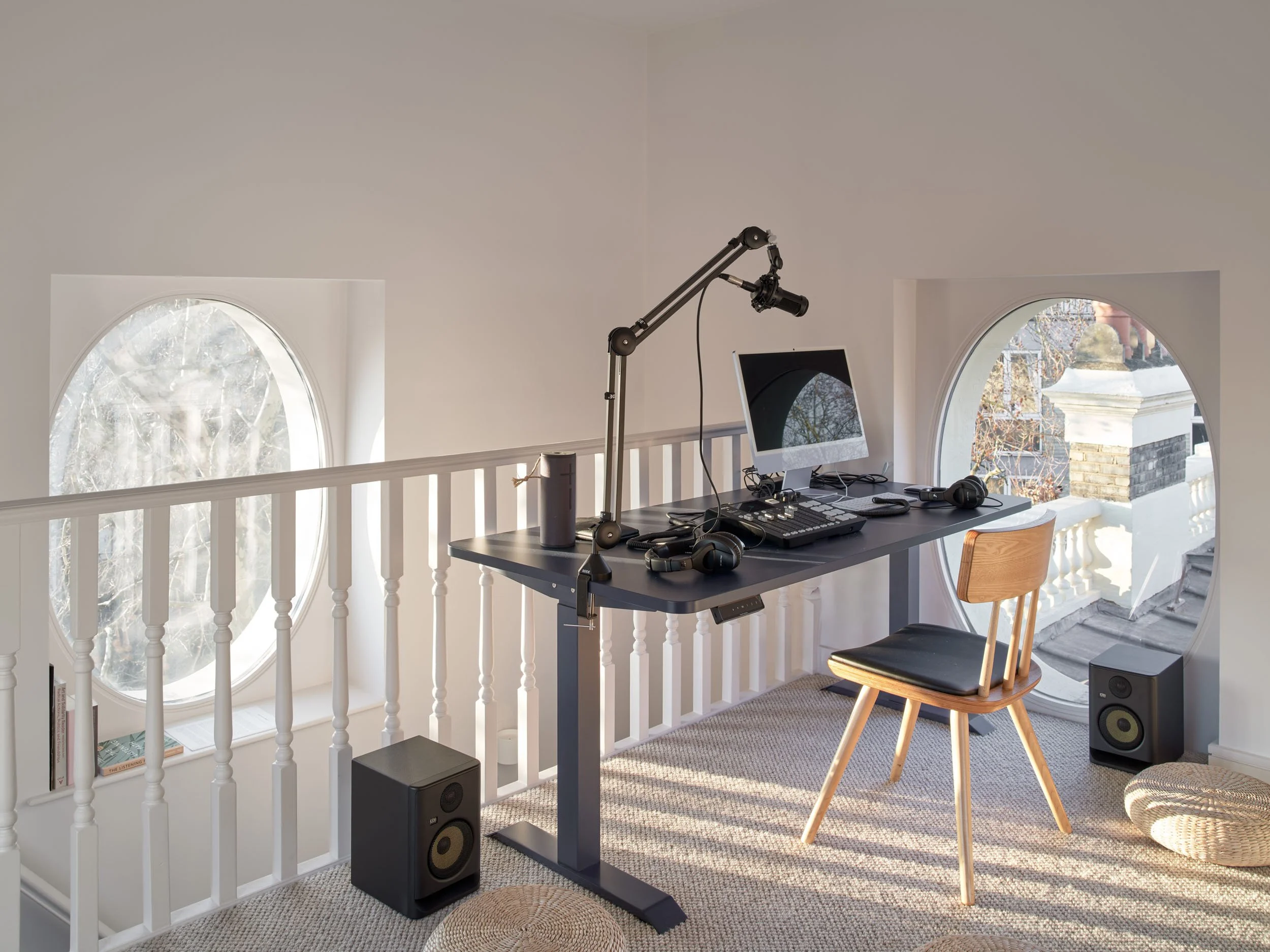
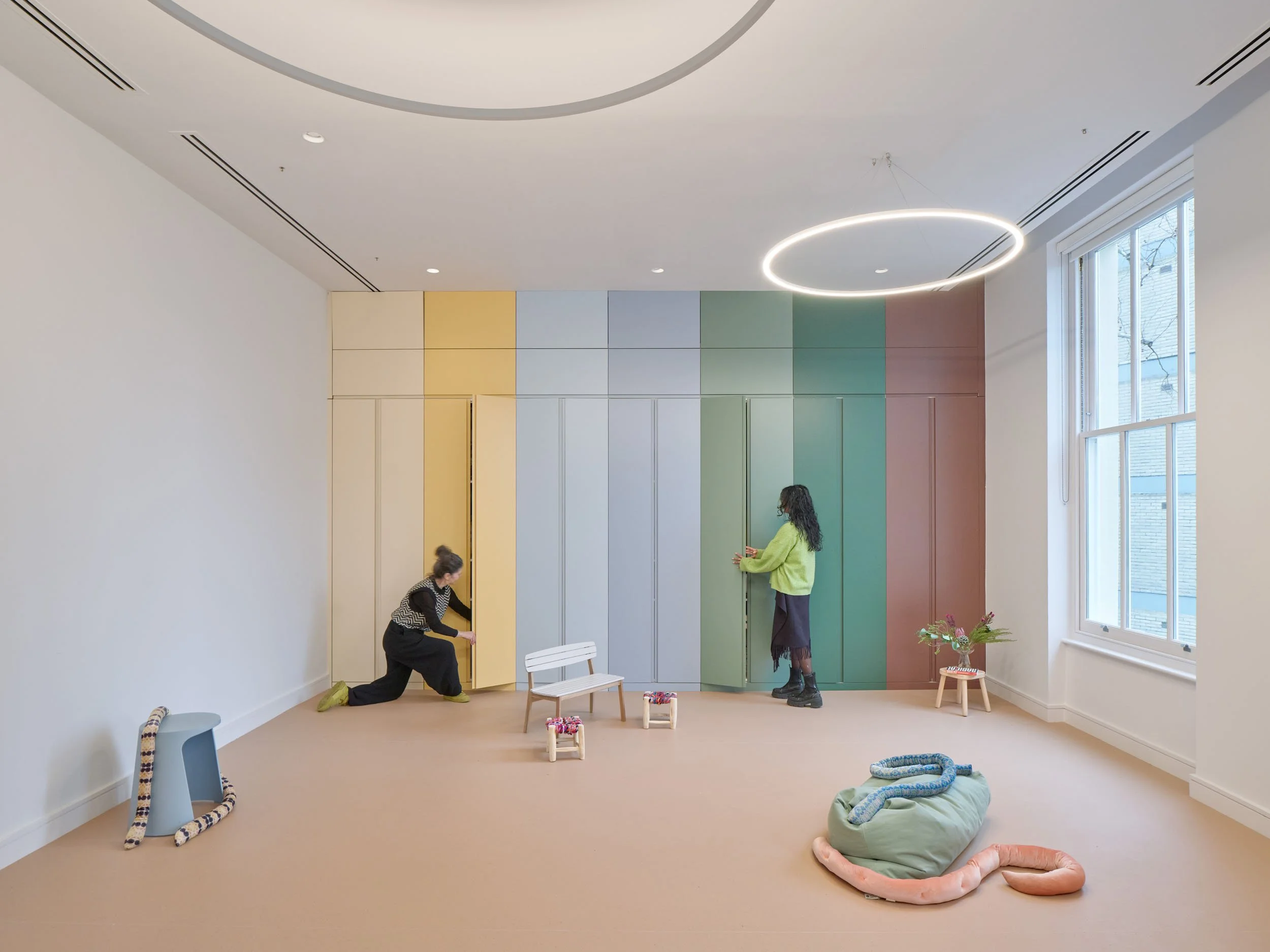
The commission arrived at a moment of organisational change and growth. Mosaic Rooms sought to unify what had been a mixed‑use building - offices, a residential flat, gallery spaces, and several sublet units - into one coherent cultural institution. The brief called for a more welcoming building, improved accessibility across all levels, increased usable space, and a dedicated new PlayLab for creative learning. A further aim was to enhance revenue generation, particularly by enlarging the bookshop and identifying underused areas with potential for future income.
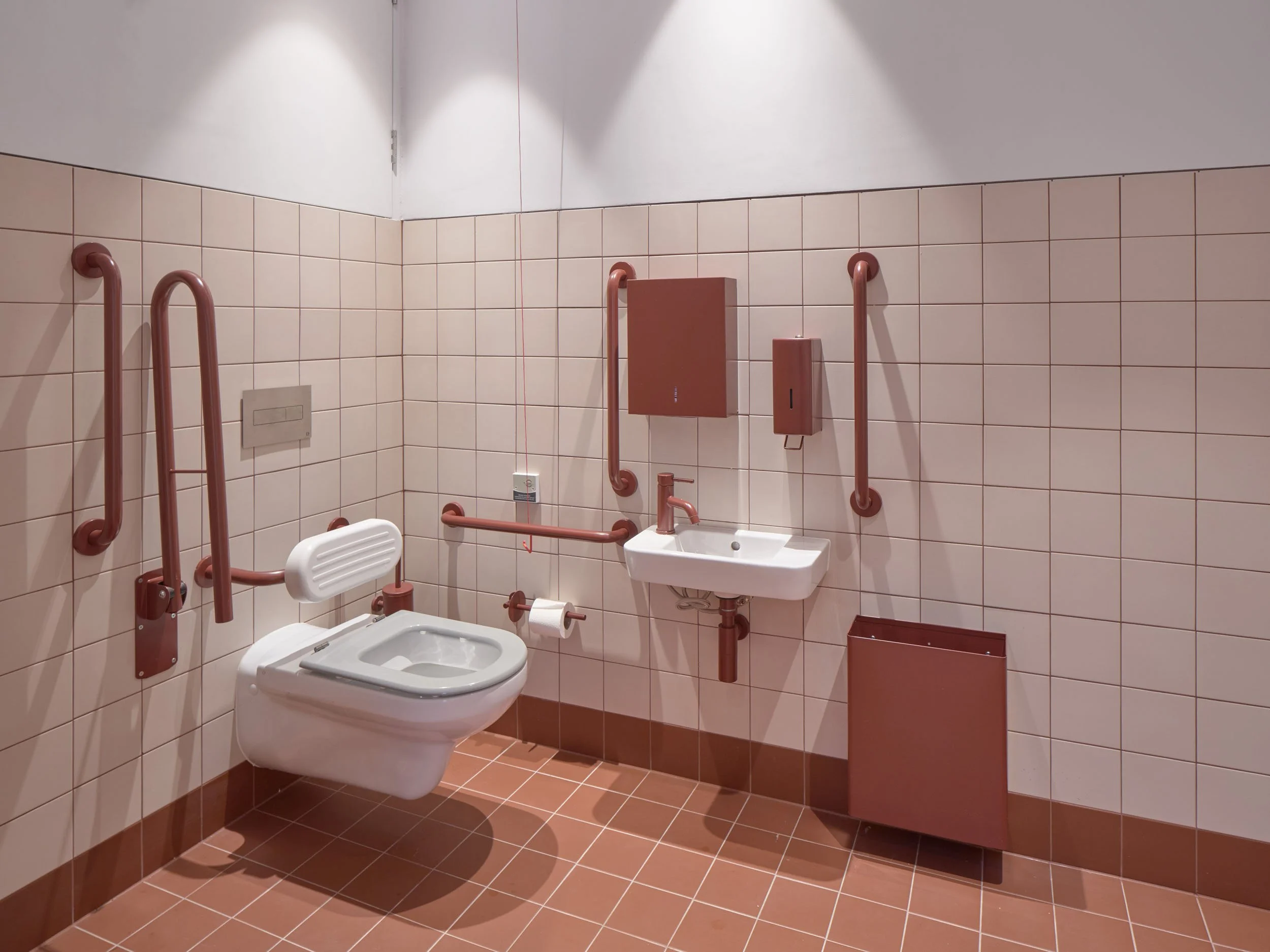
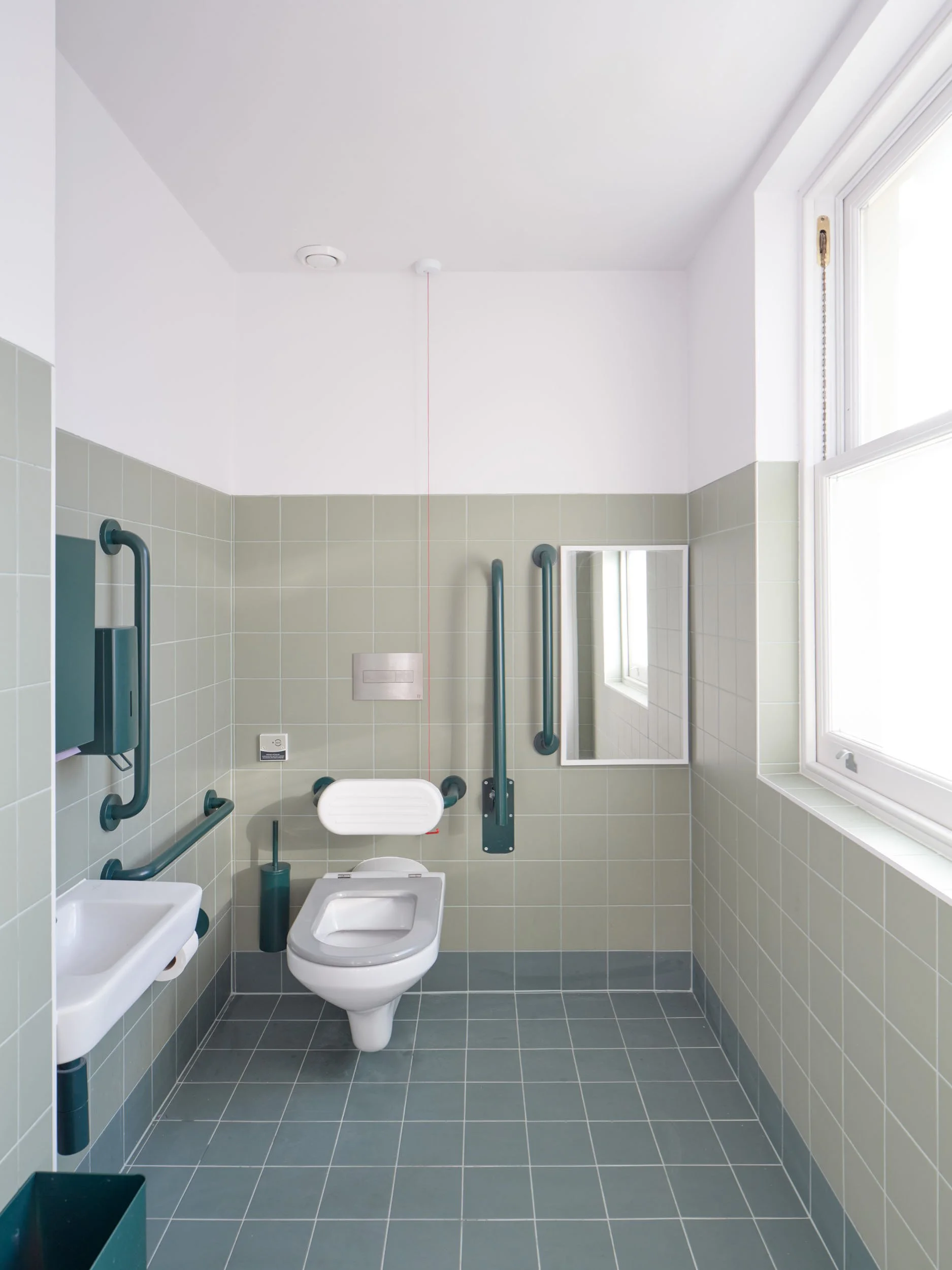
A key part of the project was addressing the accessibility challenges posed by the original Cromwell Road entrance, where visitors were required to climb steps while those with buggies, wheelchairs, or reduced mobility were directed to a separate side door. Redressing this hierarchy was essential to aligning the building with the organisation’s ethos of openness and inclusivity.
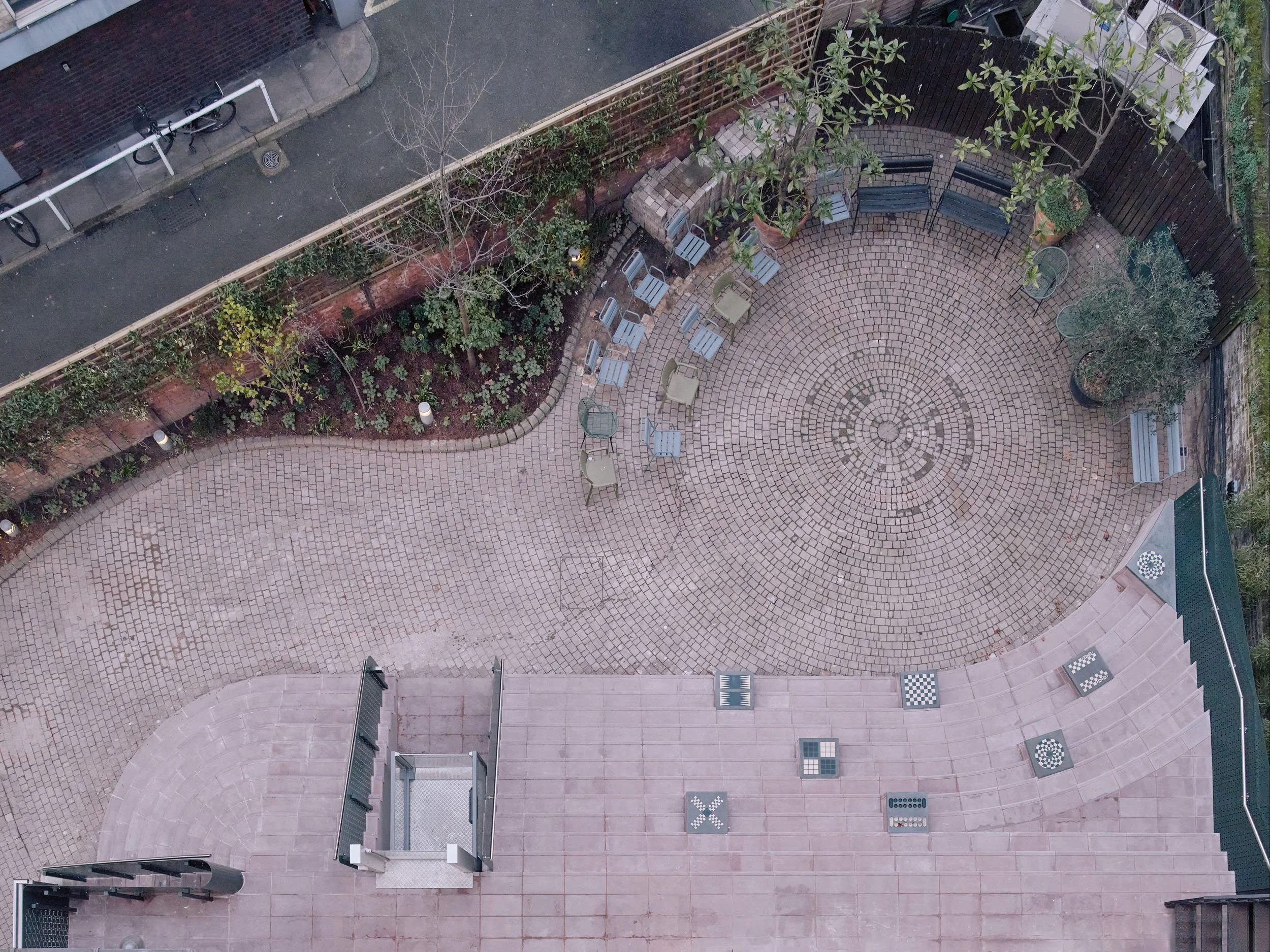
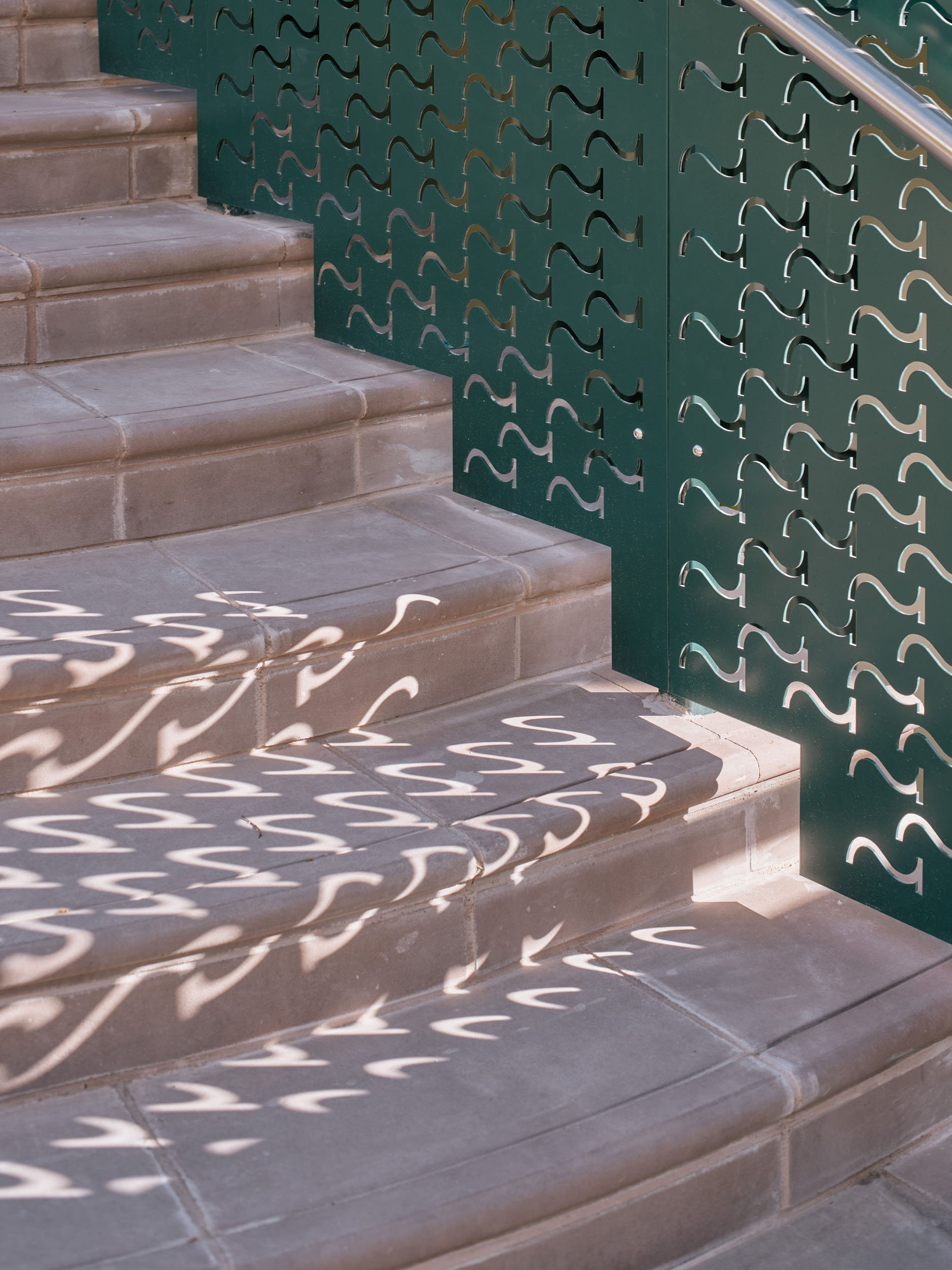
One of the most significant and innovative changes - fully embraced by the client - was the decision to relocate the main entrance to Earl’s Court Road. This allowed us to create a new external arrival space, conceived as a modest yet generous public threshold. Designed to serve multiple purposes, it can function as an informal amphitheatre, a place to gather, or simply a calm garden. The steps are shaped as an amphitheatre and have a series of jesmonite board games integrated within the steps to encourage playing, sitting and relaxing. The games were chosen by the Mosaic Rooms team as a selection of historic board games played often (or originating from) Arab culture. Surrounding the stepped amphitheatre is soft landscaping, designed by Aarde, with a planting scheme that draws on colours inspired by Arabic landscapes, offering visitors a gentle and welcoming moment before entering the building. From this garden, visitors step into a newly formed arrival room, anchored by an artwork commissioned from Dima Srouji, selected by the client to introduce the cultural programme with clarity and purpose.
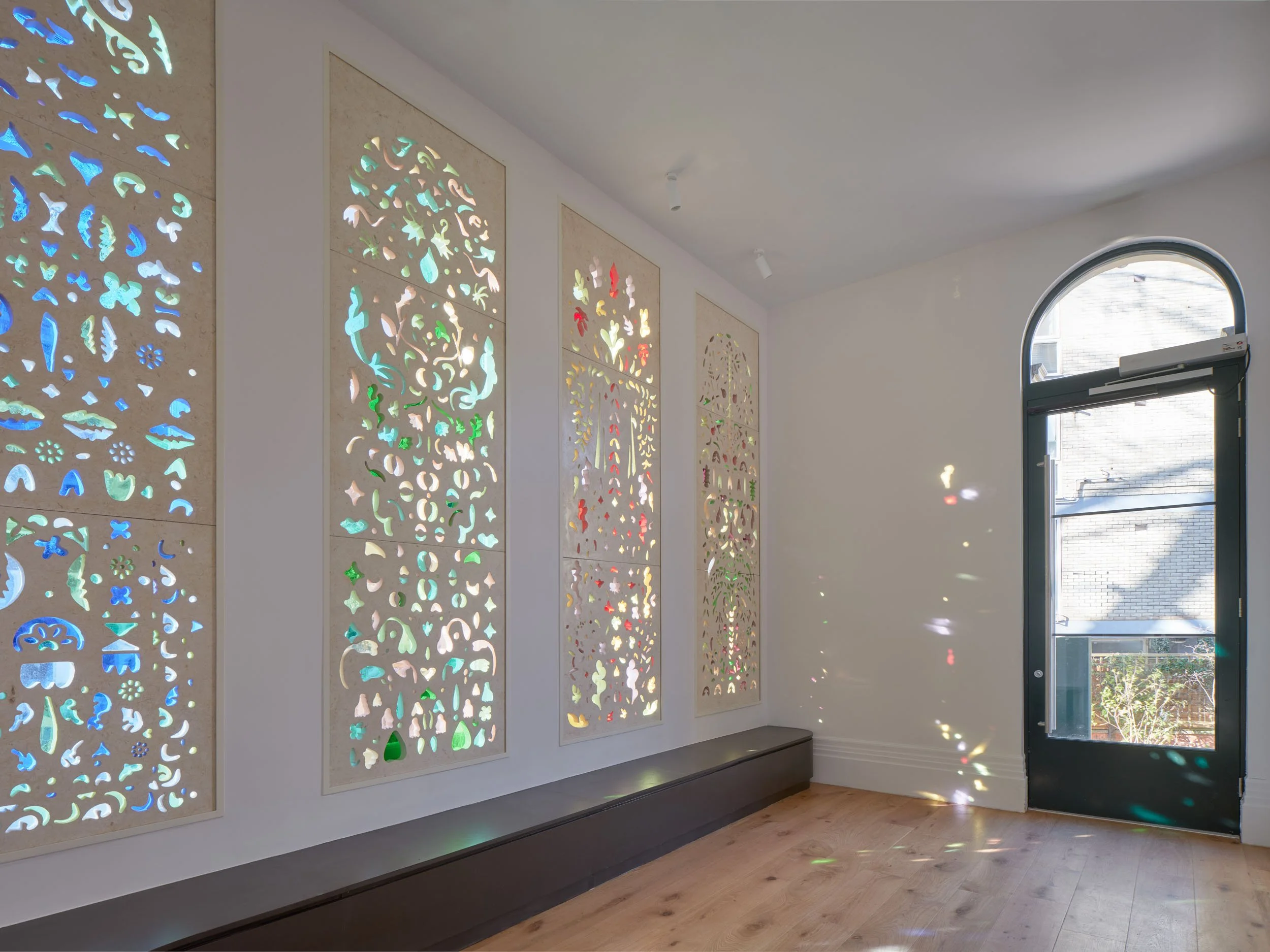
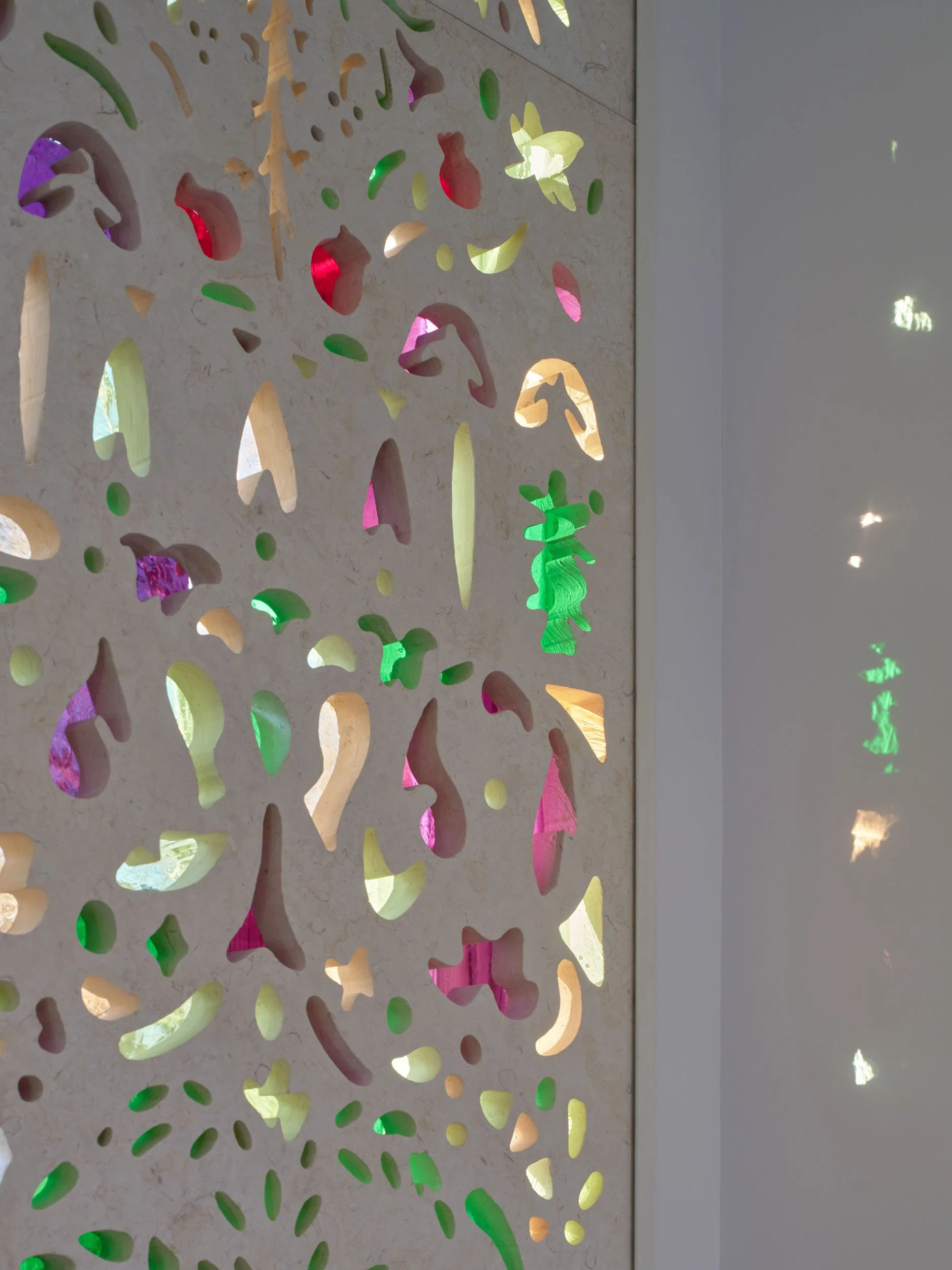
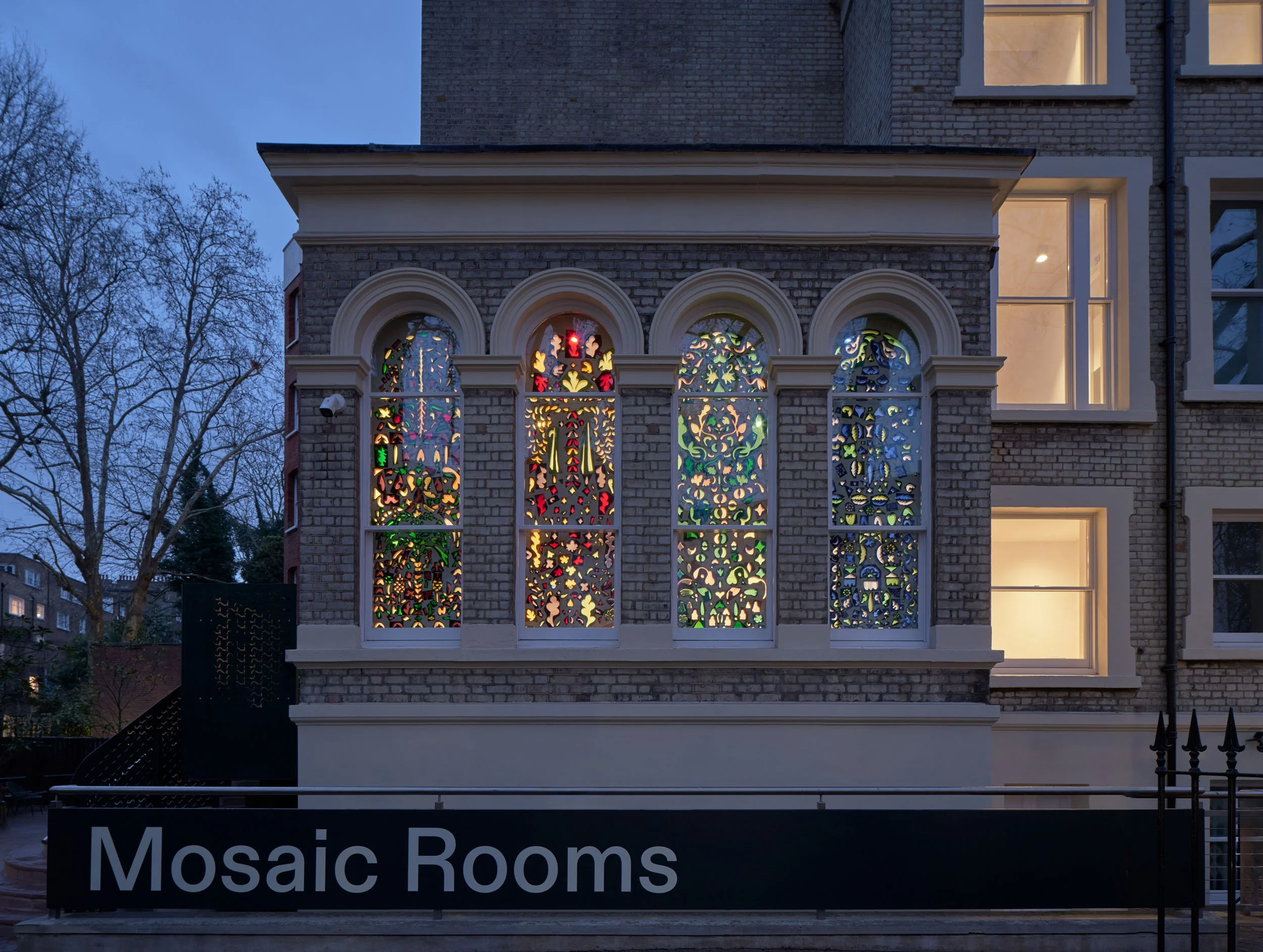
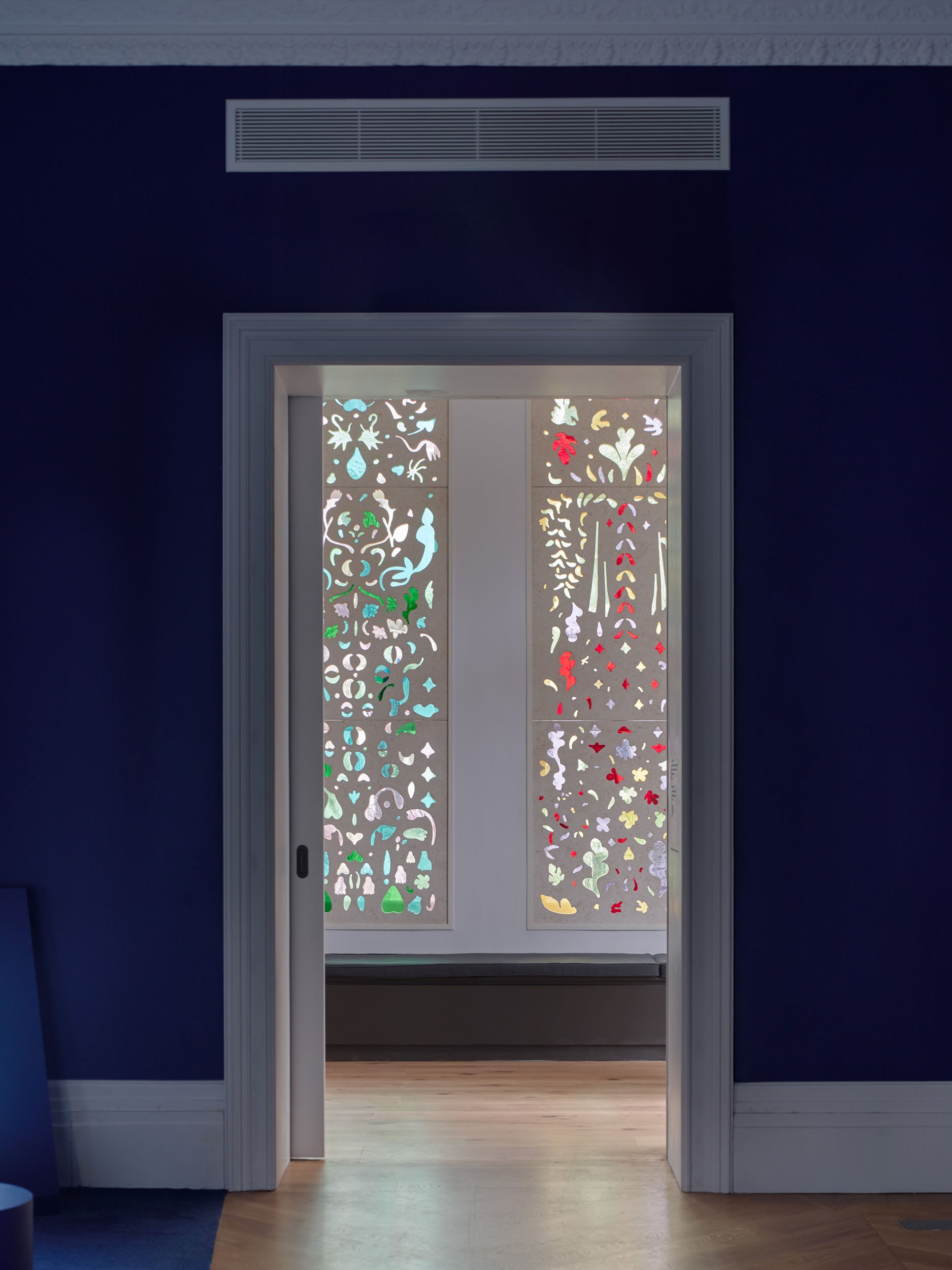
Four Moons from Home Dima Shrouji

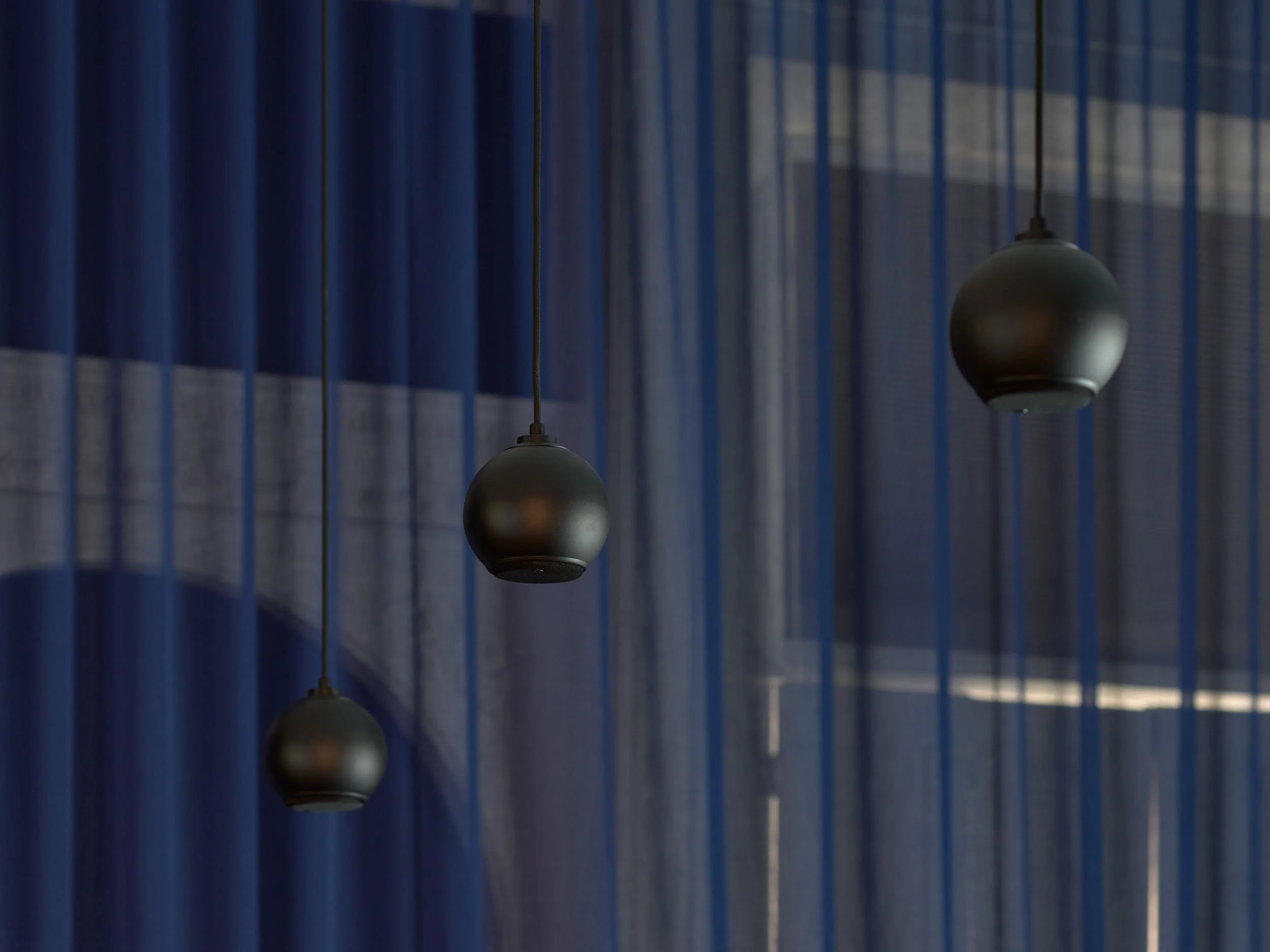
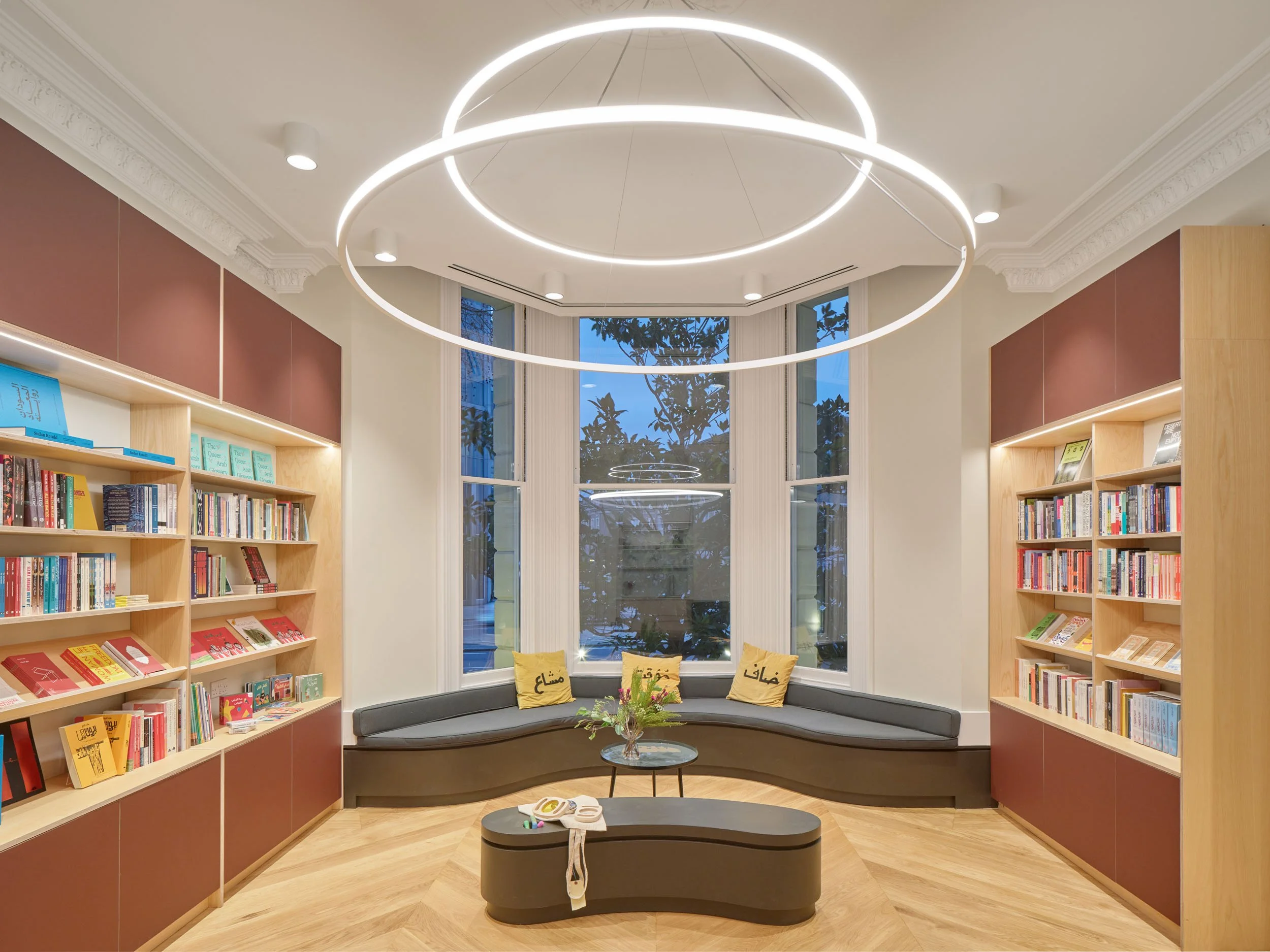
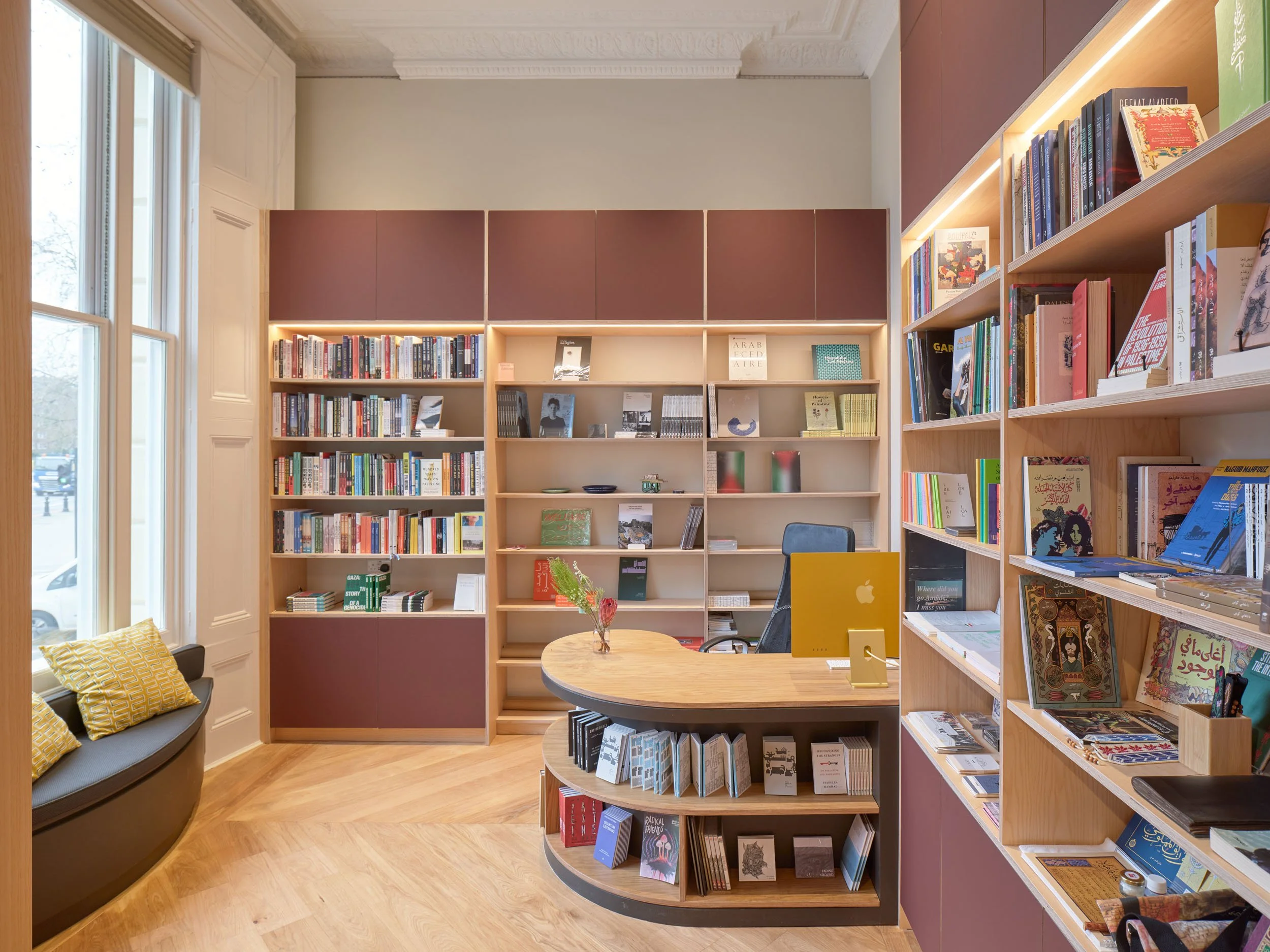
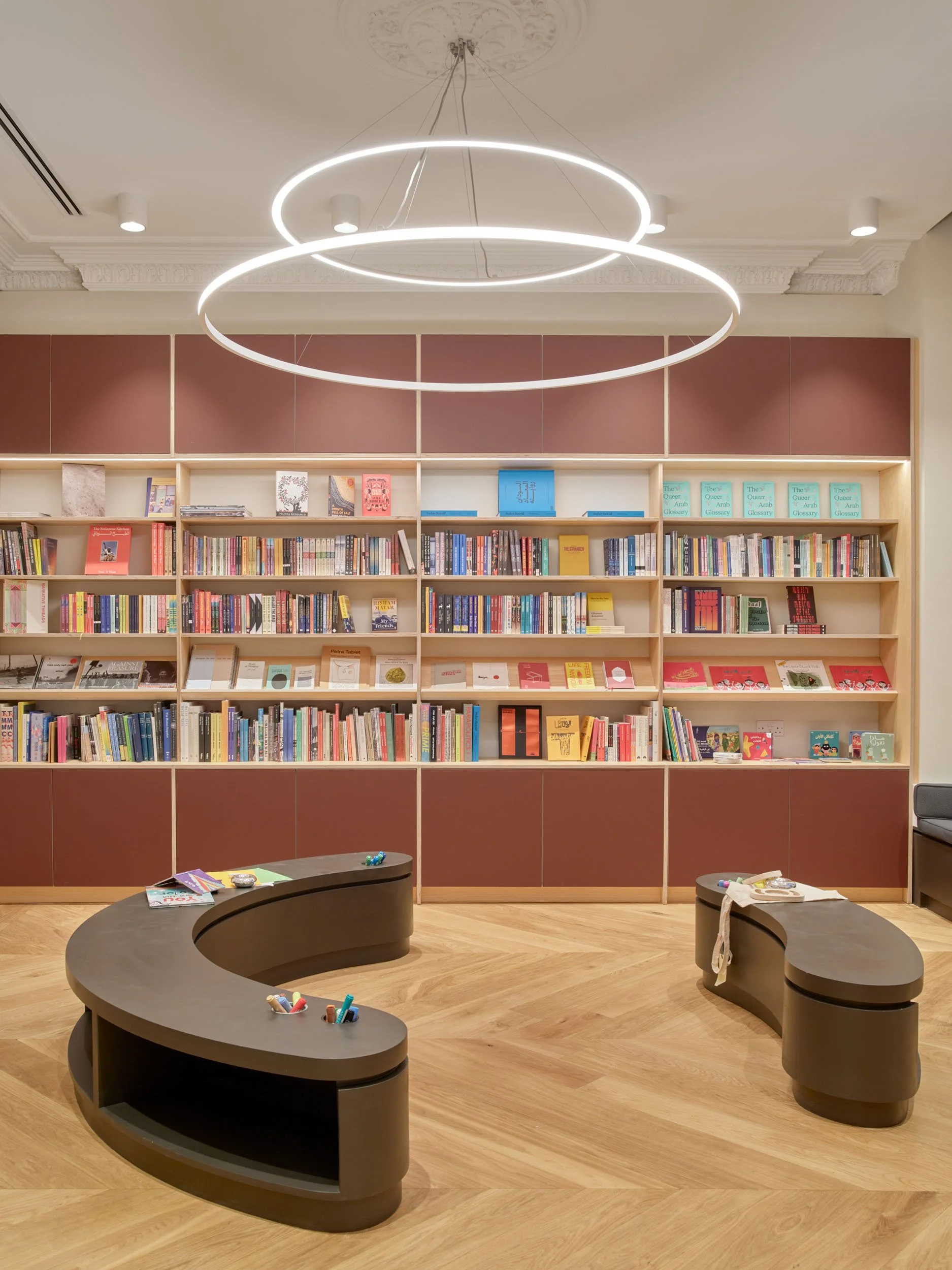
The relocation of the entrance also enabled the enlargement of the shop. The former entrance and adjacent rooms were reconfigured to create an expanded retail area capable of displaying a wider range of books, editions, and artist commissions, supporting the organisation’s long-term sustainability.
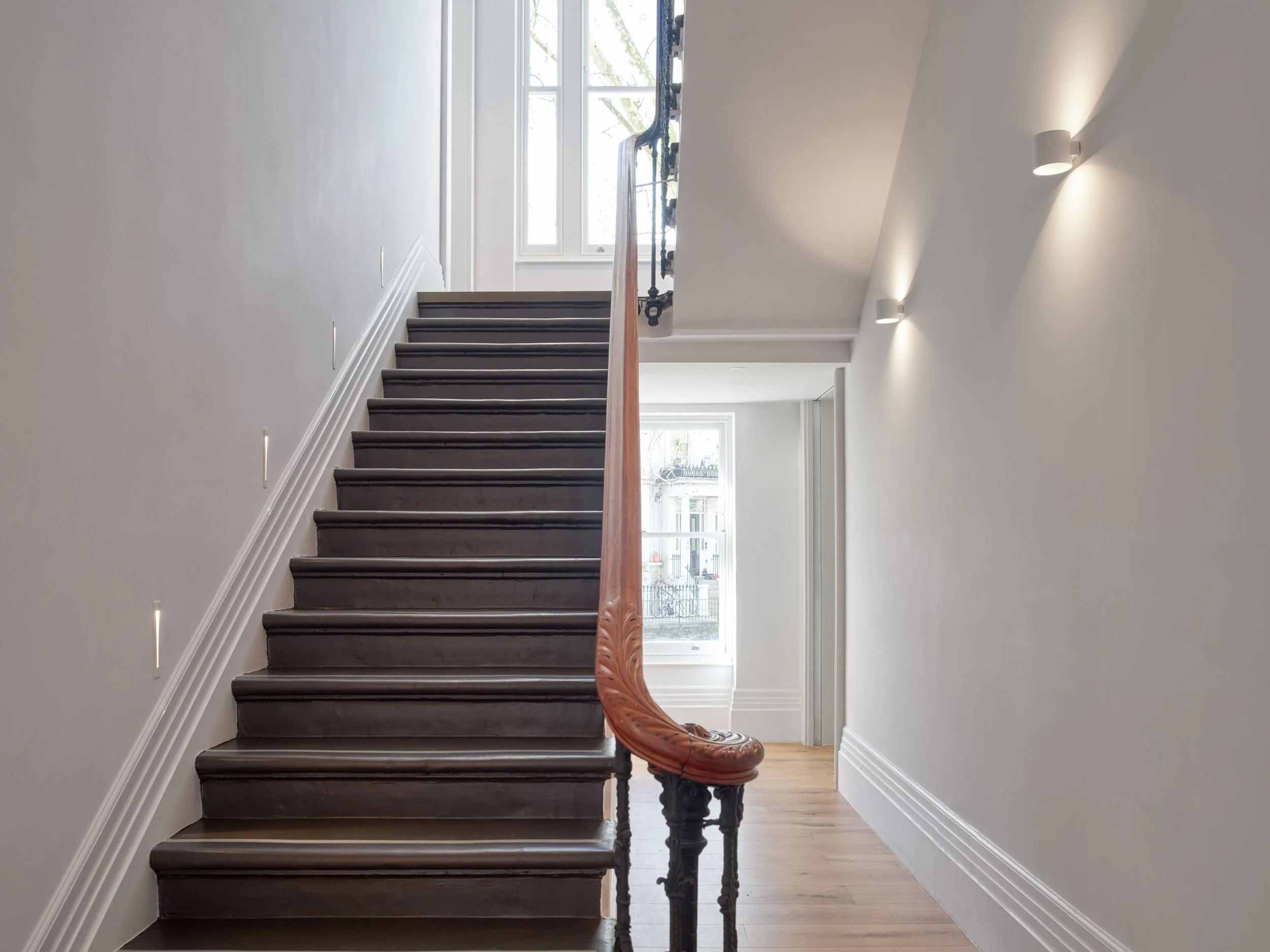
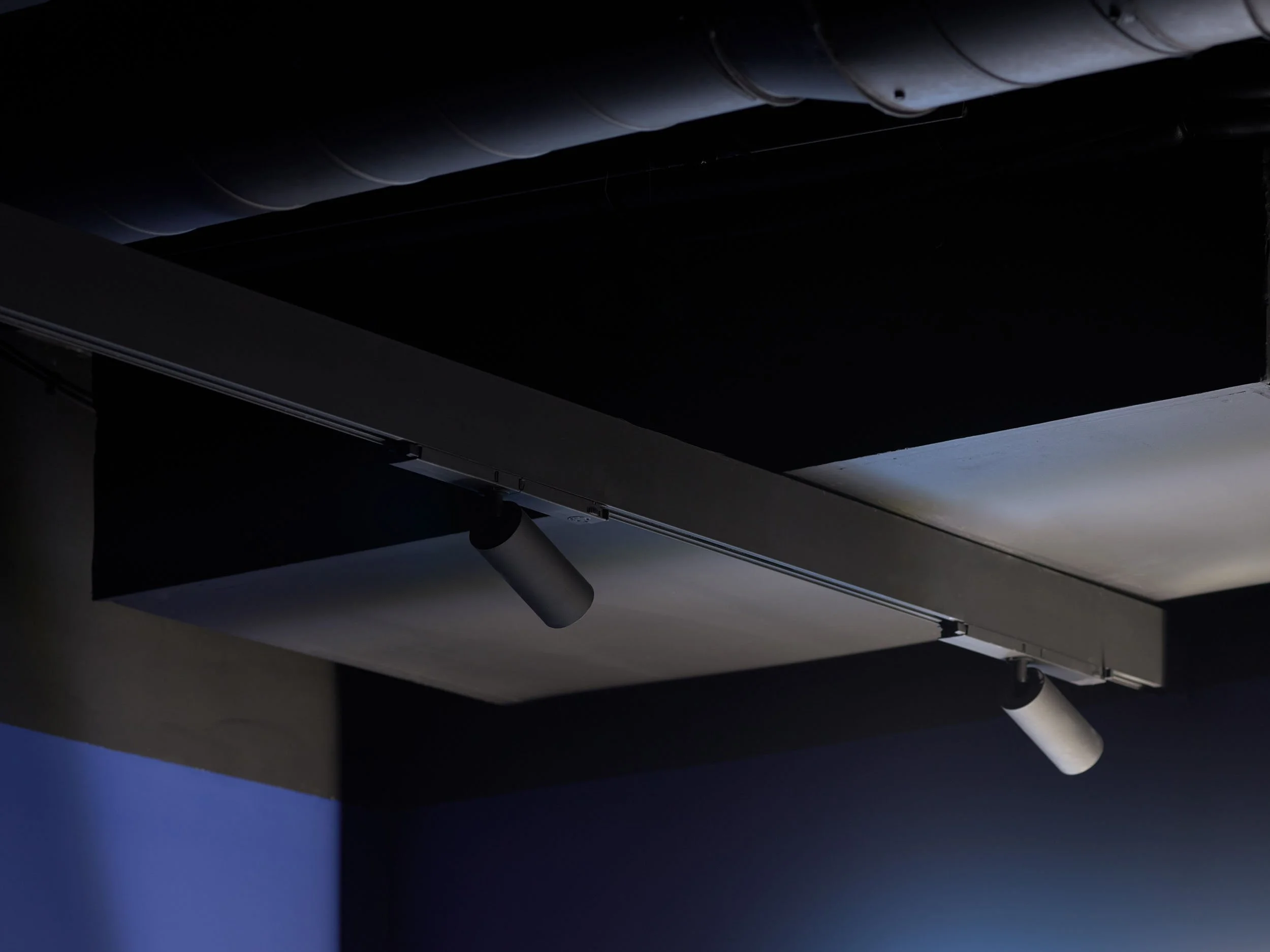
All gallery spaces within the building were carefully refurbished. On the lower ground floor, the gallery was extended, and parts of the industrial ceiling were revealed to support a more flexible and technically capable exhibition environment, including AV-focused installations. A further part of the brief involved improving circulation throughout what had previously been a fragmented plan. By removing earlier corporate partitions, introducing fire curtains, and widening passages, we created a more fluid internal layout. The building can now be visited with ease across all four levels, ensuring full accessibility for visitors of all abilities.
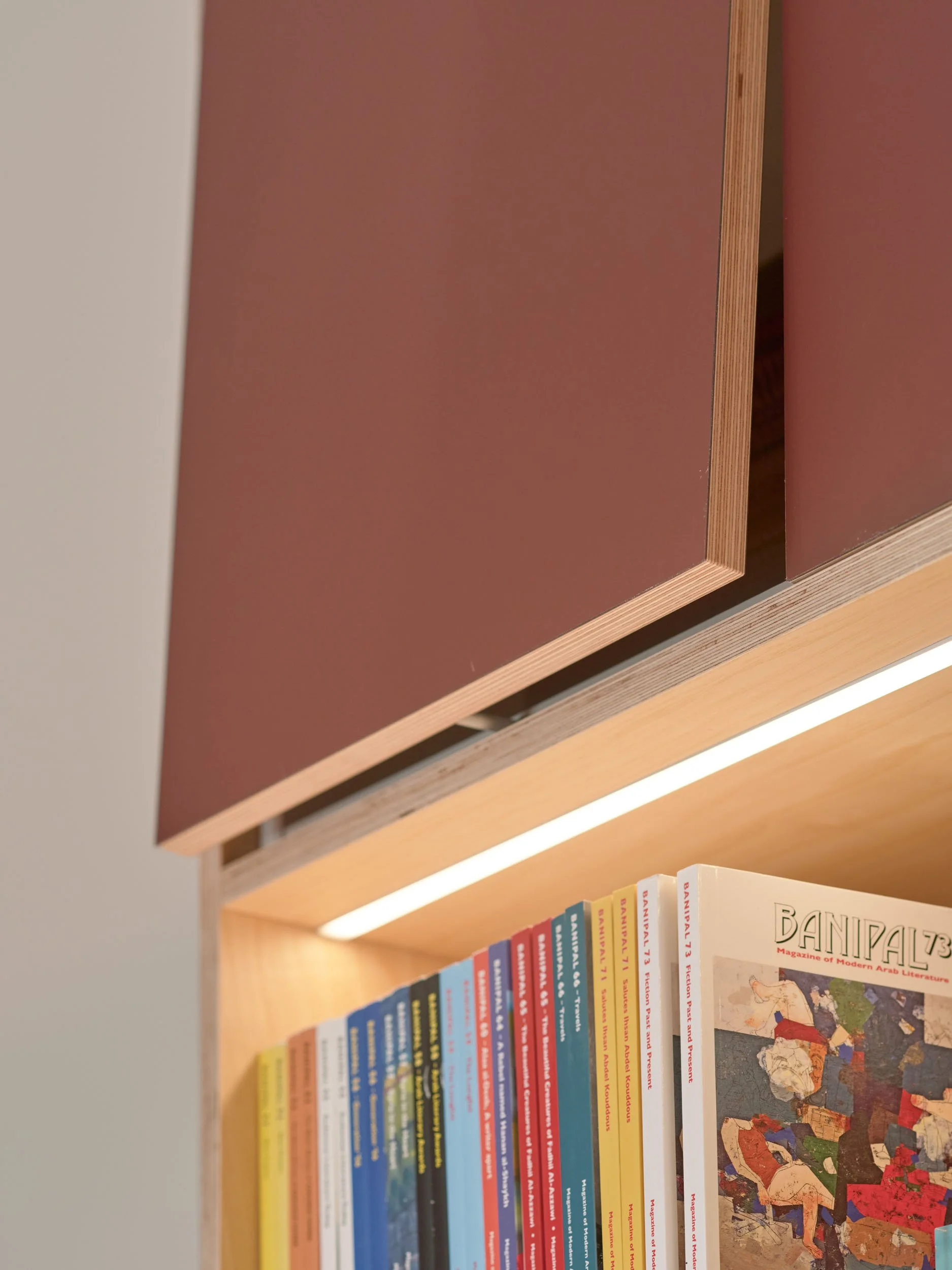
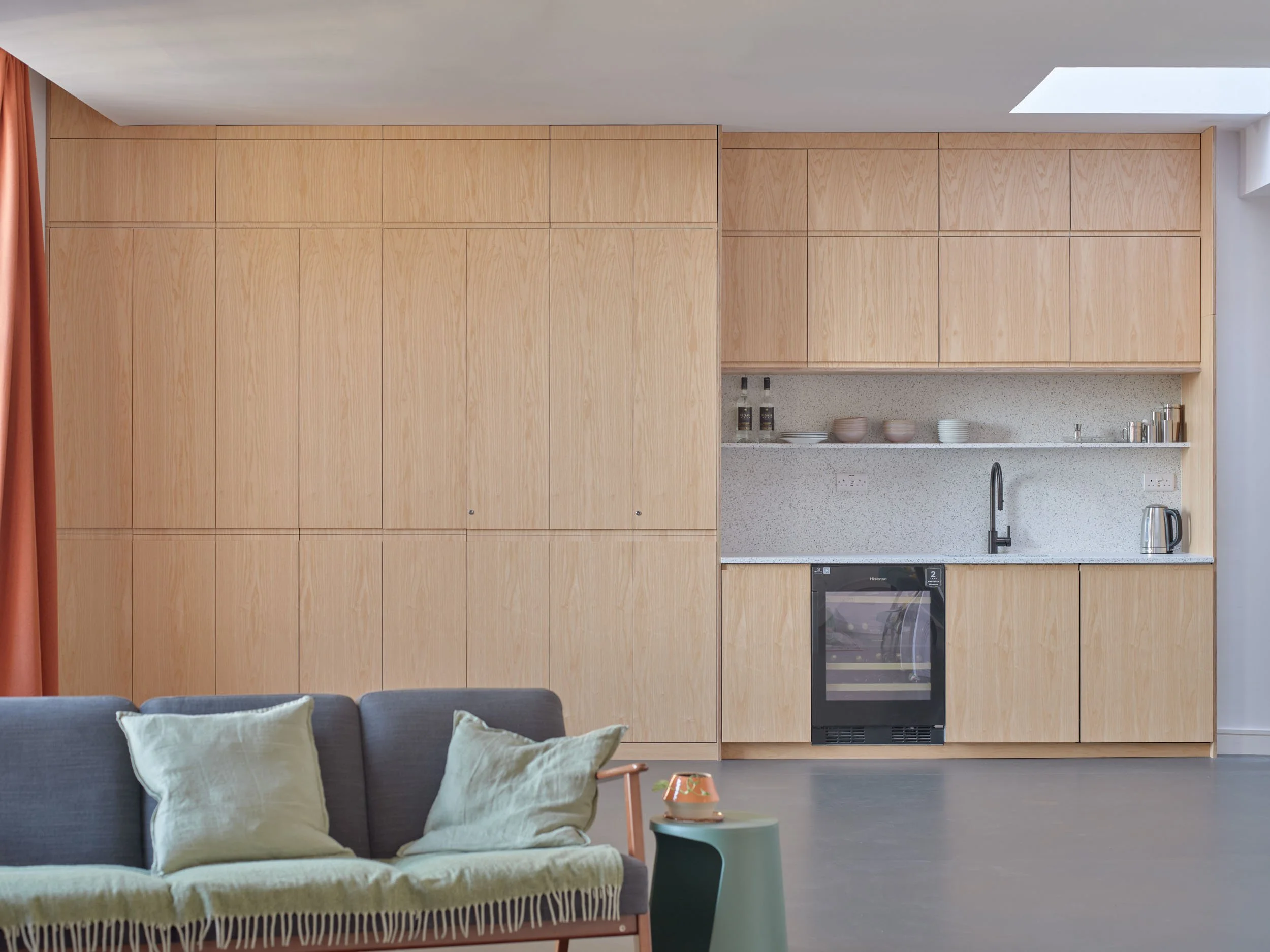
At every level, other than through an improved circulation, we have unified the Mosaic Rooms cultural spaces by using PLYKEA colourful laminated plywood. The colour palette for all cabinetry has been carefully selected to reflect the colours of the Palestinian landscape.
The project as a whole sought to bring The Tower House into alignment with the values and aspirations of The Mosaic Rooms: a welcoming, accessible, and culturally engaged institution housed within a historic building that has been carefully adapted for contemporary use.